
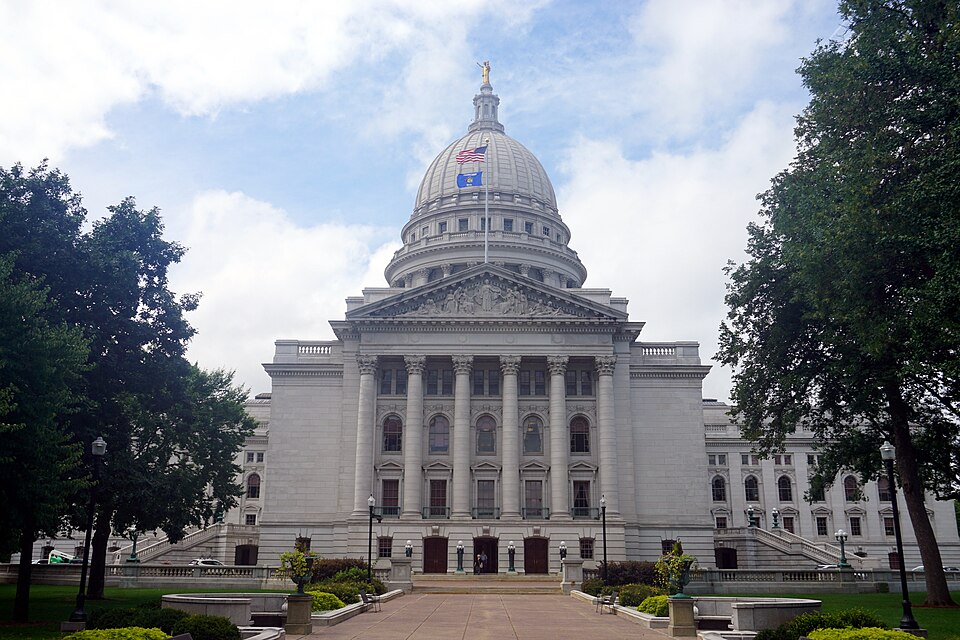
MADISON, September 18 — Wisconsin’s midterm elections on November 3 could break an eight-year stalemate over election law and hand one party a trifecta — unified control of the governor’s office and both chambers of the state Legislature — with consequences for voting rules heading into the 2028 presidential election. For the past eight years, major election changes have been frozen by a cycle of Republican-authored bills and vetoes by outgoing Democratic Governor Tony Evers, who has blocked stricter voting rules at several turns during his tenure.
That deadlock now faces its first real stress test since new, court-ordered legislative maps eliminated previous Republican gerrymandering and gave Democrats a viable path to winning legislative majorities, according to reporting by Votebeat and Inside Climate News.
Two Trifectas, Two Different Agendas
The stakes differ sharply by party, and so does the room each side would have to maneuver. If Democrats win unified control, Democratic gubernatorial nominee David Crowley and legislative leaders plan to move quickly on stalled voting-access priorities. But they face hard limits.
Stricter rules such as voter ID and the ban on private election grants are now enshrined in the Wisconsin Constitution and nearly impossible to fully roll back without further constitutional amendments, Wisconsin Watch and Votebeat report.
A Democratic trifecta would instead focus on expansions: allowing local clerks to begin processing absentee ballots on the Monday before Election Day to prevent late-night reporting delays; reviving stalled automatic voter registration proposals; codifying the legality of absentee ballot drop boxes; expanding ballot tracking; establishing standardized rules for “curing” minor mistakes on ballot envelopes; allowing voters to spoil and replace a ballot; banning firearms near polling places; shortening the state’s residency requirement for registration; and potentially restoring voting rights to individuals with felony convictions who are out on parole.
If Republican nominee Tom Tiffany wins the governorship and Republicans retain the Legislature, political scientists say room for sweeping new policy may be more limited. That is largely because Republicans already enacted their primary structural priorities during their previous period of unified control — including one of the nation’s strictest voter ID laws and strict witness-address requirements for absentee ballots.
A new Republican trifecta would likely focus on administrative changes such as allowing early in-person votes to be tabulated ahead of time but sealed until Election Day, and on solidifying and strictly enforcing existing restrictions on mail-in and absentee voting to fulfill stated goals of maximizing citizenship verification and ballot security, per WBAY.
The Court Remains the Constant Battleground
Regardless of the midterm outcomes, the Wisconsin Supreme Court — which holds a liberal supermajority — will remain a primary battleground for election laws. The court is already considering major challenges to the state’s congressional boundaries, which could alter the map layout prior to 2028, and continues to handle high-stakes litigation surrounding voter disenfranchisement and ballot administration heading into future presidential cycles. Strategically, the calculus in Wisconsin is straightforward.
The legislature and governor’s mansion can shift the rules at the margins, but the constitutional entrenchment of the strictest measures and the court’s liberal majority mean the state’s election framework will be contested across multiple fronts no matter who wins in November. What this signals for 2028 is a state whose voting rules will be shaped as much by litigation and constitutional amendment as by any single election result.
Watch the court’s congressional map ruling and the legislative map’s first real test at the ballot box.




