
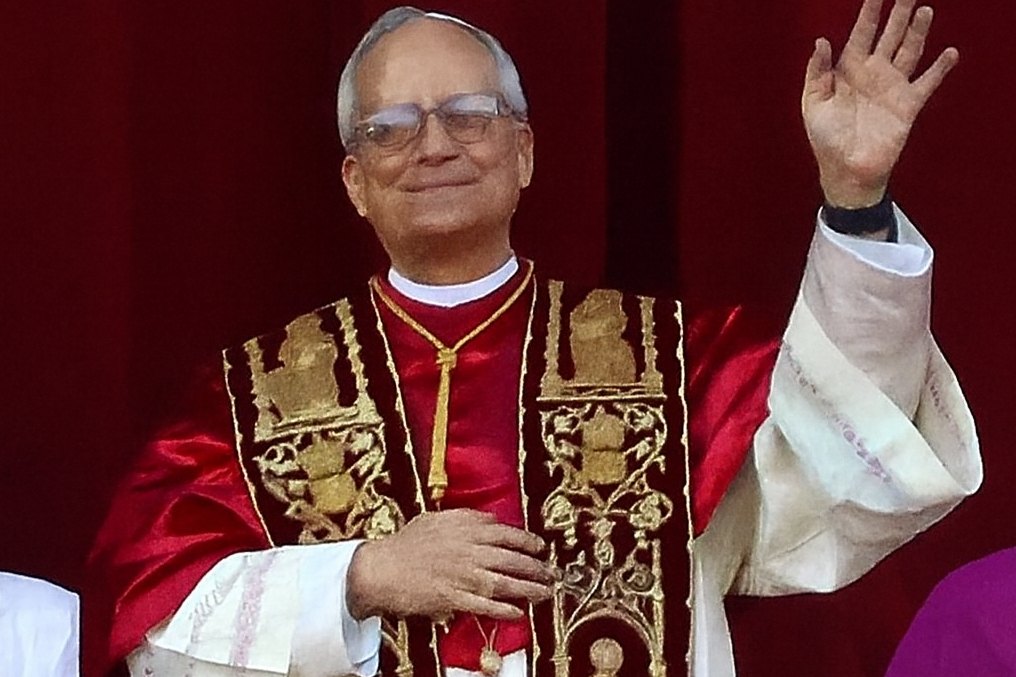
PARIS, September 25 — Pope Leo XIV arrives in France this week for the first major European apostolic journey of his pontificate, a visit framed by the Vatican as an effort to be “everyone’s pope” in a country that has kept religion largely out of public life for more than a century. The pope, elected in 2025 as the first American-born pontiff and the successor to Pope Francis, is expected to meet President Emmanuel Macron, French Catholic bishops, civic leaders, and representatives of other faiths and of non-believers.
His schedule includes a Mass at the Stade de France and a visit to a site associated with Catholic heritage, according to the itinerary released by the Vatican.
A Republic Built on Laïcité
France presents a challenge no other European stop could quite replicate. Its strict laïcité laws have kept religion largely out of public life since a 1905 law formally separated church and state. The country counts roughly 30 million baptized Catholics, yet regular Mass attendance sits in the low single-digit percentages — a congregation that is shrinking but devout, and a society that is deeply secular.
Against this backdrop, the pope must speak to two audiences at once. Analysts say the visit is a test of whether he can bridge the gap between a secular republic and a global church that still claims over 1.3 billion members.
The Vatican has leaned into the difficulty rather than avoided it, presenting the trip as an exercise in dialogue rather than proclamation.
The Shadow of CIASE
The legacy of the Church’s sexual abuse scandals hangs over the visit. The Independent Commission on Sexual Abuse in the Church (CIASE), in its 2021 report, estimated that some 216,000 minors were abused by clergy and religious figures in France since 1950. Pope Leo XIV has continued his predecessor’s reform agenda, including a focus on transparency, synodality, and outreach to marginalized communities.
French society is also contending with broader tensions over immigration, the role of Islam, and the place of religion in public life. The pope’s messages are expected to touch on climate change, migration, and poverty — themes central to his pontificate.
Diplomacy and the Wider Picture
The France trip follows a period of intense global diplomacy by the Vatican, including efforts on peace in Ukraine and the Middle East. It also highlights the complex relationship between the Vatican and France, a country historically called the “eldest daughter of the Church” but which now exemplifies the decline of institutional religion in the West. The French government, while officially secular, has cooperated with the Vatican on logistical and security arrangements.
The event has drawn significant media attention in both France and internationally, with security a major concern given recent threats in Europe. What is at stake extends beyond the Mass at the Stade de France.
The pope’s efforts to be “everyone’s pope” may resonate in a nation where many identify as culturally Catholic but not practicing — a constituency that no longer fills pews but still shapes the country’s self-image. Whether that resonance translates into anything more durable is the question the Vatican will be watching as the tour unfolds.




