
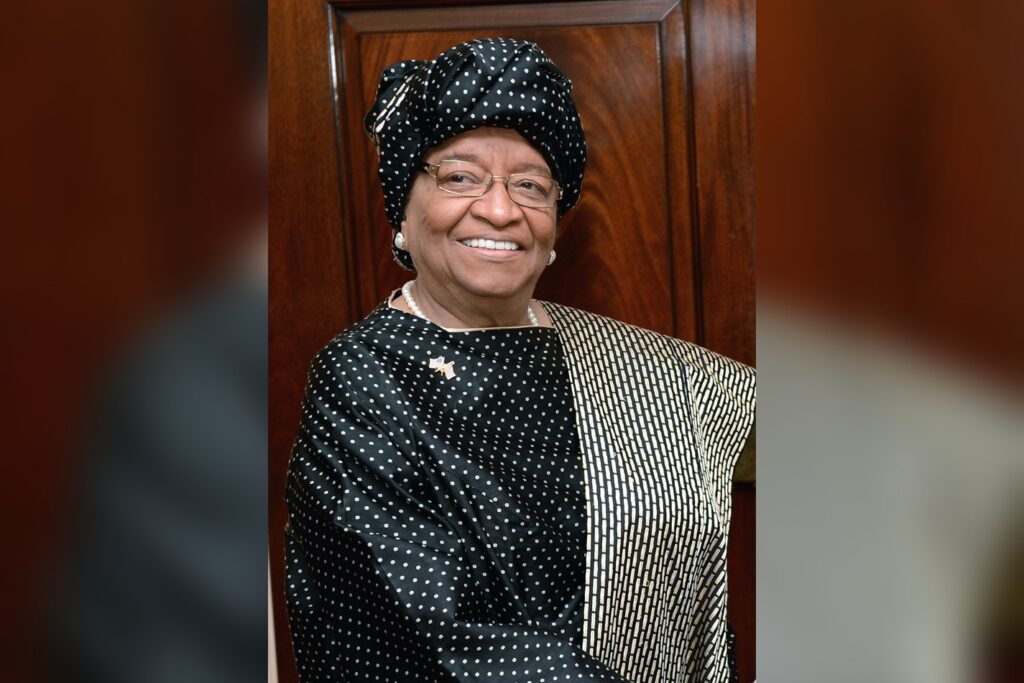
Ellen Johnson Sirleaf spent decades moving between the corridors of international finance and the dangers of Liberian politics, enduring imprisonment and exile before rising to make history. In 2006 she took office as president of Liberia, becoming the first woman to be elected head of state anywhere in Africa. Five years later she was awarded the Nobel Peace Prize. Her career traces a hard road from persecution to the highest office in her country, and from a war-shattered nation to the beginnings of recovery.
An Economist’s Education
Born in 1938 in Monrovia, the Liberian capital, Sirleaf trained as an economist. She studied in the United States and earned a master’s degree in public administration from Harvard University’s Kennedy School, an education that would shape her lifelong emphasis on sound governance and financial management. Her professional life took her into the world of international finance, with roles that included work at the World Bank and Citibank, and into public service at home, where she served as Liberia’s finance minister in the late 1970s.
Prison and Exile
Sirleaf’s outspokenness came at a cost. Under Liberia’s military and authoritarian rulers, she was imprisoned and forced into exile more than once, her career repeatedly interrupted by the political violence that engulfed the country. Rather than abandon Liberian politics, she returned, positioning herself as a persistent critic of misrule and a champion of reform through years that saw the country descend into brutal civil wars. Her toughness earned her the nickname the “Iron Lady of Africa.” She ran for president in 1997 but lost to Charles Taylor, the warlord-turned-politician whose rule would soon collapse back into conflict, and she continued to press for change from the opposition.
Those wars devastated Liberia, killing hundreds of thousands and shattering its economy and institutions. It was against this backdrop of ruin that Sirleaf mounted her bid for the presidency.
Africa’s First Elected Woman President
In 2005, in the country’s first post-war elections, Sirleaf won the presidency, and she took office in 2006. Her election was a landmark not only for Liberia but for the continent, making her the first woman to be democratically elected to lead an African nation. She inherited a state in tatters and set about the daunting task of reconstruction: rebuilding infrastructure, restoring basic services, managing the country’s debt and trying to reestablish confidence in government after years of chaos.
In 2011 she was named a co-recipient of the Nobel Peace Prize, an honor she shared with her fellow Liberian Leymah Gbowee and the Yemeni activist Tawakkol Karman, recognized for their work on behalf of women’s rights and peaceful struggle. The award elevated her international standing and drew attention to the role of women in ending Liberia’s conflict.
Testing Times and a Two-Term Legacy
Sirleaf’s presidency faced severe tests, none greater than the Ebola epidemic that struck West Africa in 2014. The outbreak overwhelmed Liberia’s fragile health system and threatened to unravel the gains of the post-war years, and her government’s handling of the crisis, alongside substantial international assistance, became a defining challenge of her second term. She also faced domestic criticism, including over the pace of anti-corruption efforts, a reminder that her tenure, like any, was contested.
She served two terms and left office in 2018, handing power to her elected successor, the former football star George Weah, in what was widely noted as Liberia’s first peaceful democratic transfer of power between elected leaders in decades, itself a significant achievement for a country only recently at war. Since leaving office she has remained an influential voice on African governance, women’s leadership and public health, drawing on the authority of a career that spanned finance, activism and the presidency. Her example has been cited by a generation of women entering politics across the continent, for whom her election shattered a long-standing barrier.
Ellen Johnson Sirleaf’s arc, from a young economist to a political prisoner and exile, and finally to a Nobel laureate and pioneering head of state, stands among the most consequential political journeys in modern African history. It is a reminder that persistence in the face of persecution can, in time, reshape the possibilities of an entire nation.




