
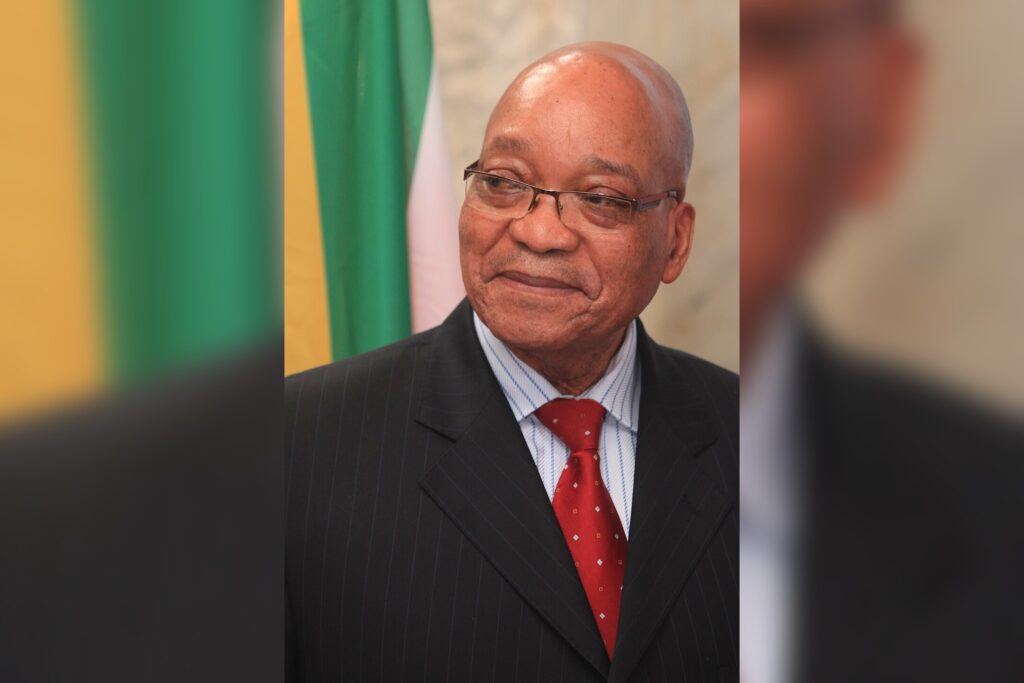
Jacob Zuma led South Africa for nearly a decade, and his presidency became a byword for corruption. His years in power were consumed by the scandal known as “state capture,” in which a wealthy family was accused of buying influence over the government itself. Forced from office by his own party, he was later jailed for defying the courts, a decision that triggered deadly riots. He still faces a long-running corruption trial tied to an old arms deal. His fall is a plain account of power abused and institutions strained to their limits.
From Liberation Hero to President
Born in 1942 in rural Natal, Zuma had little formal schooling and joined the liberation struggle as a young man, spending a decade imprisoned on Robben Island during the apartheid era and later working in the ANC’s intelligence structures in exile. That history gave him deep credibility within the movement. He served as the country’s deputy president from 1999 but was dismissed in 2005 after a close financial associate was convicted in a corruption case, an early warning of the troubles to come. He weathered that setback, along with a separate rape charge on which he was acquitted in 2006, and went on to win the presidency in 2009, leading both the country and the ANC.
For his supporters he was a populist man of the people; for his critics he was a canny political operator whose tenure would come to be defined by graft.
State Capture
The central scandal of Zuma’s presidency was state capture, the systematic corruption of government decision-making for private benefit. At its heart was his relationship with the wealthy Gupta family, who were accused of using their closeness to the president to improperly influence the appointment of ministers and the awarding of lucrative state contracts. The allegations described a government whose machinery had been bent to serve private interests rather than the public.
Corruption controversies had swirled around Zuma for years. In one notorious episode, public money was spent on lavish upgrades to his private homestead at Nkandla, and the country’s Constitutional Court ruled in 2016 that he had violated the constitution by failing to repay the funds. The damage to public trust was immense. As the evidence and outrage mounted, Zuma lost the support of his own party. Under intense pressure from the ANC, he resigned as president in February 2018 and was succeeded by his deputy, Cyril Ramaphosa.
Contempt of Court and Prison
A judicial commission led by the country’s judiciary, commonly called the Zondo Commission, was established to investigate state capture. Zuma defied a direct court order to testify before it. In June 2021 the Constitutional Court found him in contempt and sentenced him to 15 months in prison. In July 2021 he was jailed.
His imprisonment set off days of violent riots and widespread looting, concentrated in the KwaZulu-Natal and Gauteng provinces, in which hundreds of people were killed. It was one of the worst outbreaks of unrest since the end of apartheid. Zuma was later released on medical parole, a decision that courts subsequently ruled unlawful, underscoring how contested his treatment remained.
Unfinished Business
Zuma’s legal troubles did not end with the contempt case. He still faces a separate, long-running corruption trial connected to a 1990s arms deal, involving allegations of bribery tied to the arms company Thales. That case has dragged on for years amid repeated delays.
Even after his fall, Zuma has remained politically disruptive. Ahead of the 2024 election he broke with the ANC, the party he once led, and backed a new party, uMkhonto weSizwe, known as MK, complicating the political landscape and drawing support away from his former allies. The record of his career is unambiguous on its central point: a president who presided over the systematic corruption of the state, who was jailed for defying its highest court, and who remains, years later, entangled in the courts he sought to evade.




