
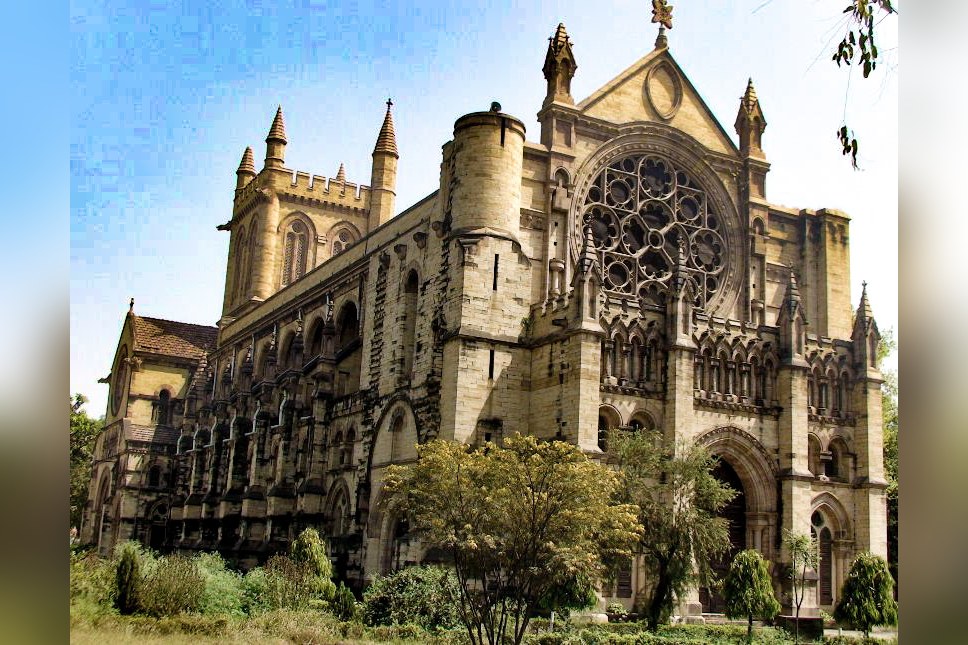
For weeks after the June attack on All Saints’ Cathedral, the silence from many quarters has been louder than the breaking of pews and the shouts of hired goons. The assault on a post-budget dialogue was condemned by church leaders, civil society, and politicians across the divide. Former Interior CS Fred Matiang’i called it a shameful act, linking it to the leadership crisis he flagged in 2022.
Yet the public has not risen. Not the way it once did.
That absence of outrage is its own kind of consequence. It tells you something about where the Church now stands in Kenya. For decades, an attack on a cathedral would have been a national scandal.
It would have packed news pages for weeks, sparked sermons from every pulpit, and forced the government into a defensive crouch. This time, the story has faded.
The question is why. The Church built this country’s schools. It runs its hospitals.
It buried the dead and fed the hungry. But its deepest currency was moral authority—hard-won during the dark years of single-party rule. Bishop Alexander Muge paid for that authority with his life.
Father John Anthony Kaiser paid the same price. They stood against authoritarianism when standing was dangerous.
They defended human rights when the state considered human rights a threat. That authority was not inherited. It was earned, at great personal cost.
Now the currency is devalued. The June attack on All Saints’ Cathedral was not just an act of violence.
It was a test. The Church failed it, not by its own actions but by the nation’s reaction. Or lack of reaction.
When a sacred space is invaded and the public barely shrugs, the Church has to ask itself hard questions. What happened to its witness? Where did its moral voice go?
Kenya is already moving toward the 2027 General Election. That is a short runway.
Political temperatures will rise. The same forces that hired goons to storm a church dialogue will be back, likely with bigger plans and deeper pockets. The Church has a choice.
It can treat the All Saints’ attack as an isolated incident, something to condemn and move past. Or it can treat it as a warning—a sign that its sanctuary is no longer respected because its voice is no longer feared.
Matiang’i’s remarks cut through the noise. Whether you agree with his politics or not, he named the problem. A leadership crisis.
The Church is part of that crisis. It has not been the moral compass it once was. Public institutions still lack the courage to confront injustice, but so does the Church.
That is the fallout of June 28. The attack itself was ugly.
The response to it is the real story. The Church needs an urgent meeting before 2027. Not to plan election strategy.
To ask itself what it stands for. To remember Muge and Kaiser.
To decide whether it will earn its authority again—or watch it slip away entirely. The goons are still out there. The next target might not be a dialogue.
It might be a pulpit.




