
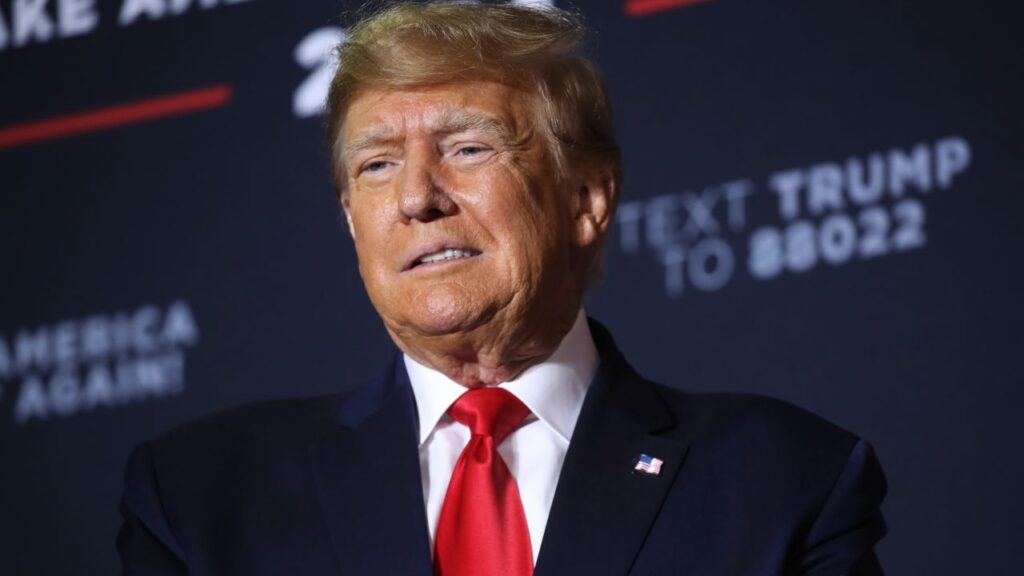
MOSCOW, July 10 — The Trump administration’s proposal to impose tariffs on Russian oil remains under internal discussion, with no formal announcement expected before March 2025, according to sources familiar with the planning. The measure is being developed as part of a broader strategy to compel Moscow to enter substantive peace negotiations over the war in Ukraine. The administration has indicated a desire to bring Russia to the negotiating table within 100 days of taking office.
That deadline falls on April 30, 2025. The tariff plan, if approved, would be paired with diplomatic overtures, including a potential summit between President Trump and Russian President Vladimir Putin.
That meeting has been discussed but not confirmed, officials said. The timeline for any tariff action depends on several variables. The US Congress may need to approve new tariffs if they apply to American imports directly.
However, the administration could bypass legislative approval by invoking the International Emergency Economic Powers Act, or IEEPA, which grants the president broad authority to regulate economic transactions during declared national emergencies.
Previous Negotiations and the Path Ahead
Past peace efforts have yielded no ceasefire. Talks in Istanbul in March 2022 collapsed. A subsequent round in Saudi Arabia in August 2023 also failed to produce a breakthrough.
The record shows that both rounds broke down over fundamental disagreements on territorial control, security guarantees, and the status of Russian-occupied regions. The European Union is expected to coordinate its own tariff measures with Washington.
Brussels adopted its 15th sanctions package against Russia in December 2024, and EU officials have signaled readiness to layer additional economic pressure on Moscow. Ukraine’s President Volodymyr Zelenskyy has called for stronger sanctions, including a full embargo on Russian energy exports. Moscow has threatened to retaliate by cutting off gas supplies to Europe.
The Kremlin employed the same tactic in September 2022, when it halted flows through the Nord Stream 1 pipeline. European capitals remain wary of a repeat disruption, particularly as winter approaches.
Key Diplomatic Milestones
The next major deadline in the tariff and negotiations timeline is the Group of Seven summit in June 2025. Sources indicated that a unified tariff plan could be announced at that gathering, provided the internal US policy process is complete and European allies have aligned their positions. The administration has not publicly confirmed whether Trump and Putin will meet before or after the G7 summit.
Any such meeting would mark the first direct talks between a US president and the Russian leader since the full-scale invasion began in February 2022. The tariff proposal itself remains a work in progress.
Officials confirmed that the precise rate, scope, and implementation mechanism have not been finalized. The administration is weighing how aggressive a tariff structure would maximize leverage at the negotiating table without triggering a broader economic confrontation that could destabilize global energy markets.
Strategic Context
The tariff-and-negotiation approach reflects a calculation in Washington that economic pressure alone has not changed Russia’s calculus. The 15 EU sanctions packages and multiple US sanctions rounds have imposed costs on the Russian economy but have not forced a withdrawal from Ukrainian territory. Moscow, for its part, has signaled willingness to discuss terms but has not shifted its core demands.
Russian officials have publicly stated that any settlement must recognize Crimea as Russian territory and acknowledge the annexation of four eastern Ukrainian regions. Kyiv has rejected those conditions.
The 100-day timeline gives the administration until late April 2025 to assess whether the tariff threat, combined with direct presidential diplomacy, can produce movement. If no progress is made by the G7 summit in June, sources said, the administration could escalate with additional measures, including secondary sanctions on entities that facilitate Russian oil sales.
The coming months will test whether economic leverage and high-level engagement can achieve what two years of grinding warfare and multiple rounds of sanctions have not: a durable ceasefire and a framework for ending Europe’s largest armed conflict since 1945.




