
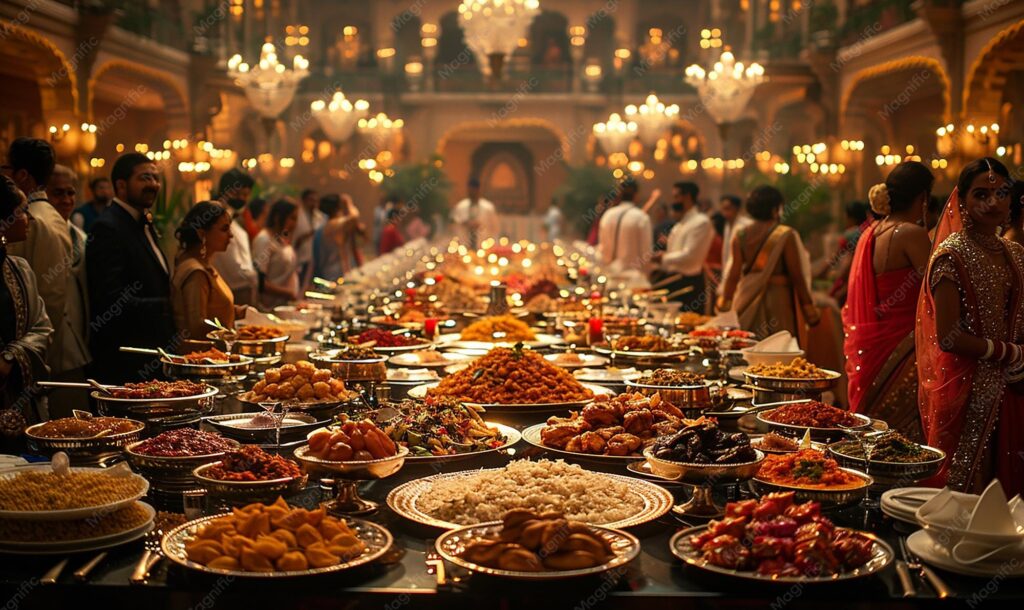
A wedding celebration in Saharsa district turned into a scene of conflict when the bride’s family substituted chicken for mutton on the feast menu without consulting the groom’s party. The dispute, which local observers say reflects deeper economic strains, comes as data show that India’s retail inflation for meat and fish has averaged roughly 8 to 10 percent year-on-year during the 2025-2026 financial year, driven by rising feed costs and persistent supply chain disruptions.
Over the same period, mutton prices in Bihar have climbed approximately 15 percent from 2024 to 2026, now ranging between ₹700 and ₹800 per kilogram. Chicken prices rose about 10 percent, settling at ₹200 to ₹250 per kilogram. The cost differential is stark: for a wedding feast serving 200 guests, a mutton-based menu could exceed ₹1.4 lakh, while an equivalent chicken menu would cost roughly ₹40,000.
That price gap likely motivated the bride’s family to switch the protein without informing the groom’s side, sparking the clash.
Economic Pressures Behind the Menu Change
Analysts point to the widening gap between premium meats and more affordable alternatives as a key factor in the incident. Mutton, a traditional centerpiece at many North Indian wedding feasts, has become increasingly costly relative to chicken. Inflation in the meat and fish category—averaging 8 to 10 percent year-on-year—reflects broader trends in India’s food economy, where feed prices and supply-chain bottlenecks have pushed up costs. Local observers noted that the substitution underscores how economic pressures can strain social obligations, potentially leading to violence when expectations are broken.
The price data also suggest implications for local businesses. Butchers and caterers in Saharsa and similar districts may see reduced demand for premium meats at weddings if such disputes become more common, further squeezing their livelihoods.
Bihar’s economy remains heavily agricultural, with a Gross State Domestic Product (GSDP) of approximately ₹8.5 lakh crore in 2025-2026. But inflation erodes purchasing power, particularly in districts like Saharsa, where per capita income is low and households are highly sensitive to food price volatility.
Bihar’s Agricultural Economy and Social Strains
Bihar is a state in eastern India with deep historical roots. It borders Uttar Pradesh, Nepal, West Bengal, and Jharkhand, and its land is divided by the Ganges River. The region was once home to renowned centers of learning such as Nalanda and Vikramashila, which flourished under royal patronage during ancient dynasties like the Mauryas and Guptas. It holds key Buddhist sites including Bodh Gaya, where the Buddha is said to have attained enlightenment.
Its name derives from the Sanskrit word vihāra, meaning “abode,” reflecting its historical connection to Buddhist monasteries. With Hindi and Urdu as official languages and Maithili, Magahi, and Bhojpuri widely spoken, Bihar is one of India’s most populous states and a place of linguistic diversity.
Since the late 1970s, the state has faced challenges in social and economic development, often attributed to historical policies and governance issues. In recent decades, efforts to improve infrastructure, healthcare, education, and governance have aimed at reviving its economy. Yet, as an agricultural state with a large population, Bihar remains sensitive to shifts in food prices and economic pressures, which can strain social traditions and local businesses.
The wedding menu incident serves as a small but telling example of how inflation can disrupt long-standing customs. For a community where wedding feasts carry deep social significance, the substitution of chicken for mutton represented not just a cost-saving measure but a breach of unwritten agreements between families.
As food prices continue to climb, similar tensions may become more frequent, testing the resilience of social bonds in one of India’s most historically rich yet economically vulnerable states.




