
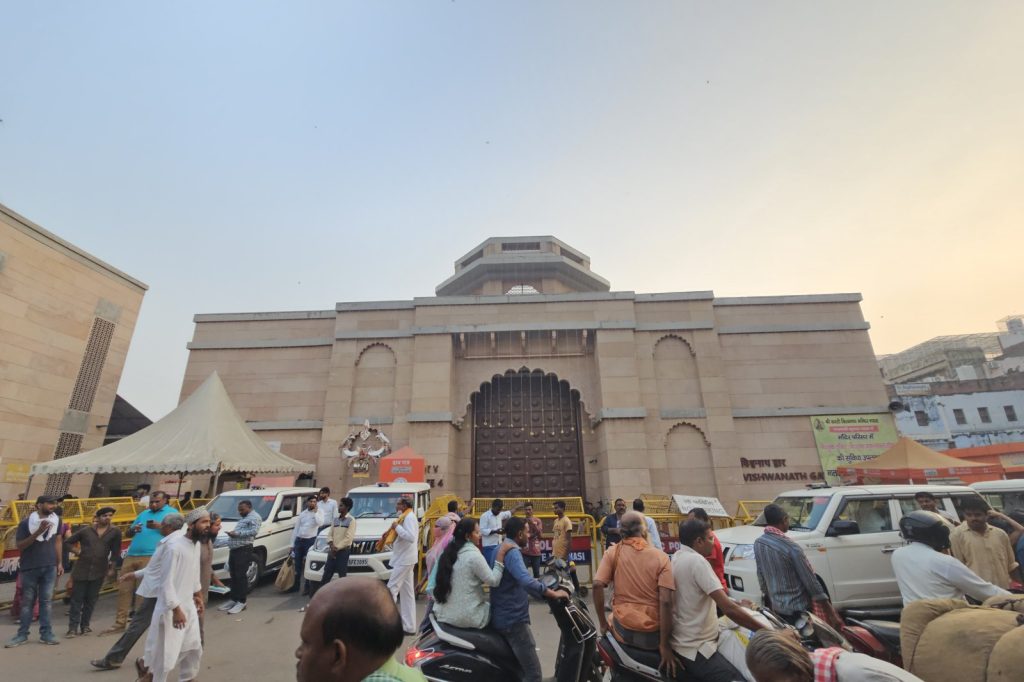
VARANASI, August 3 — A man posing as a priest at the Kashi Vishwanath Temple has been caught demanding money from a devotee for darshan, the latest in a string of incidents that the temple’s management says should never happen at all. The accused extorted INR 4,000 from a pilgrim before the devotee lodged a complaint with the Varanasi Police. Officers stepped in, and the money was refunded to the visitor.
Free darshan, but the touts keep coming
The Kashi Vishwanath Temple is managed by a trust under the Uttar Pradesh state government, and that trust has repeatedly made one thing clear: darshan at the temple is entirely free for every devotee. No fees. No mandatory offerings.
No special charges to see the deity. Yet fake priests and touts continue to surface, preying on pilgrims who may not know their rights — or who assume that a man in priestly robes at a revered shrine must be authorised to collect money.
The trust’s repeated advisories are, in part, a response to that confusion. But they are also a warning.
Signboards, loudspeakers, and police patrols
To combat the problem, the temple trust has installed signboards across the complex telling visitors — in plain language — that no payment is required for darshan. Public address systems make the same announcement, broadcasting the message so that no pilgrim arriving at the gates can miss it. The trust also works directly with local police to monitor the area and prevent fraudulent activities before they happen.
It is a collaborative effort between temple management and law enforcement, aimed at protecting devotees from the moment they arrive. Still, the recent case shows the challenge is not fully solved.
A devotee who had already paid was forced to file a complaint to get the money back — and the intervention came only after the fact.
A sacred destination for Hindus worldwide
The stakes here go far beyond one tourist being overcharged. Kashi Vishwanath is one of the 12 Jyotirlingas, a set of sacred Shiva temples that hold a central place in Hindu worship. For millions of Hindus across India and around the world, a pilgrimage to Varanasi and its most famous shrine is a once-in-a-lifetime journey — often made by families who have saved for years to get there.
That is precisely why the trust’s message matters. When a devotee is cheated at the gates of one of the holiest sites in Hinduism, the harm is not just financial.
It undermines trust in an institution that is supposed to welcome all worshippers equally, regardless of background. The temple’s status as a Jyotirlinga also means the eyes of the global Hindu community are on Varanasi. Incidents like this one ripple through diaspora communities across Southeast Asia and beyond, where devotees follow news from the shrine closely.
What to watch next
The immediate question is whether the Varanasi Police and the temple trust can translate their existing measures — the signboards, the announcements, the monitoring — into a real deterrent. The refund in this case is a small victory, but it came after the damage was done. For devotees planning a visit, the trust’s guidance remains unchanged: darshan is free, and anyone demanding payment is not acting on the temple’s behalf.
The challenge now is making sure that message reaches every pilgrim before a tout does.
Sources
{“@context”: “https://schema.org”, “@type”: “NewsArticle”, “headline”: “Uttar Pradesh Temple Trusts: No Darshan Fees at Kashi Vishwanath”, “description”: “VARANASI, August 3 — A man posing as a priest at the Kashi Vishwanath Temple has been caught demanding money from a devotee for darshan,…”, “datePublished”: “2026-08-03T09:30:00+00:00”, “author”: {“@type”: “Person”, “name”: “Merry Gel Sigui”}, “publisher”: {“@type”: “Organization”, “name”: “InfoPulse Today”, “url”: “https://newsfeed.infopulsetoday.com/”}, “citation”: [{“@type”: “CreativeWork”, “url”: “https://en.wikipedia.org/wiki/Uttar_Pradesh”}]}




