
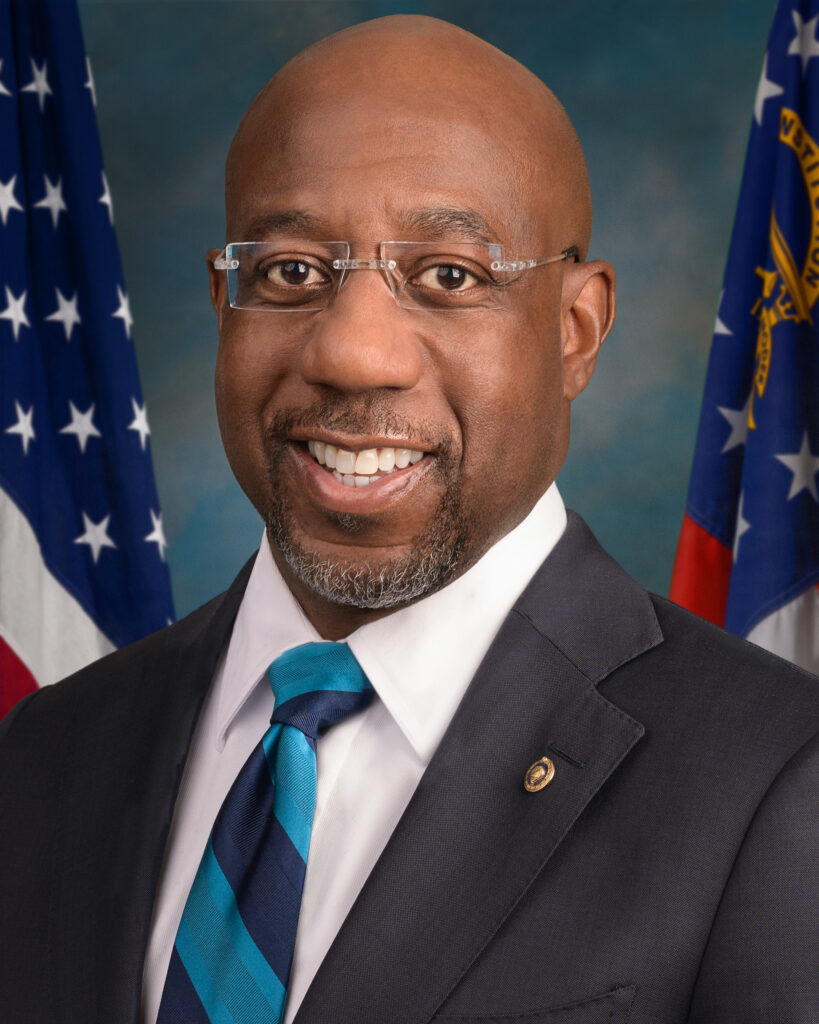
On This Day: Warnock Joins Democratic Bloc in Blocking Stop Insider Trading Act
On September 30, 2026, Senator Raphael Warnock was among the 47 members of the Democratic caucus who voted against cloture on H.R. 7008, the Stop Insider Trading Act, preventing the bill from advancing to a final vote in the U.S. Senate. The cloture vote, Roll Call #253 of the 119th Congress, 2nd session, failed 53-47, with all 53 votes in favor coming from Republicans and all 47 opposed coming from Democrats, including independents Angus King of Maine and Bernie Sanders of Vermont.
Because cloture requires 60 votes to succeed, the motion to proceed to the bill was blocked, and H.R. 7008 did not move forward to final passage. This procedural outcome must be described accurately: the Senate did not reject or vote down the bill on its merits; it blocked cloture, thereby filibustering the measure and denying it the opportunity to reach a final up-or-down vote.
What the Senate Actually Voted On
H.R. 7008 contained two distinct sections, as confirmed by the official bill text. Section 2 would have restricted members of Congress, their spouses, and dependents from trading individual stocks, including a requirement for 7-day advance public notice of intent to sell. Section 3, titled “Requiring Voters to Provide Photo Identification,” would have mandated that in-person voters in federal elections present valid physical photo identification at the polls, with narrow exceptions for religious objectors and uniformed or overseas voters.
Senate Democratic leaders, including Chuck Schumer, stated publicly that they blocked the bill because the voter-ID provision was a “poison pill” and argued that the stock-trading restrictions were too weak, describing them as “toothless.” Supporters of the bill countered that Democrats could have advanced the stock-trading ban and then amended the voter-ID provision, rather than blocking a measure that paired two policies with broad public support. It is important to note that this vote occurred separately from an earlier Senate action: on March 17, 2026, the Senate voted 51-48 (Roll Call #57) to advance a SAVE Act voter-eligibility measure via the S.1383 vehicle, a vote in which the same Democratic caucus also opposed the measure.
These two votes are distinct and should not be conflated.
How Warnock Got to the Senate
Senator Raphael Warnock became a U.S. Senator through a path rooted in public service and electoral victory. He served as the senior pastor of Atlanta’s Ebenezer Baptist Church, the historic pulpit once held by Martin Luther King Jr., before entering politics.
Warnock won the January 2021 special runoff election to complete the unexpired term of Senator Johnny Isakson, defeating appointed incumbent Kelly Loeffler. He then secured a full term by winning the December 6, 2022 runoff election over Republican Herschel Walker, receiving 51.4% of the vote to Walker’s 48.6%, a margin of +2.8 percentage points. As of 2026, Warnock has served two terms in the Senate and is not considered a new senator, having first been elected in 2021.
He sits on the Senate Agriculture Committee and holds the distinction of being the first Black U.S. Senator to represent Georgia. Regarding a documented past controversy, in 2002, while serving as an assistant pastor in Baltimore, Warnock and a colleague were arrested and briefly charged with obstructing a police child-abuse investigation at a church-run summer camp.
Prosecutors later dropped the charges, concluding that the incident was a miscommunication and that Warnock had actually aided the investigation. This outcome is a matter of public record and should be stated with legal precision: no conviction occurred, and the charges were dismissed.
Two Measures Americans Broadly Support
The two components of H.R. 7008 each reflect policies that have consistently drawn strong public support in national polling. Regarding the photo voter-ID requirement in Section 3, multiple reputable polls have shown overwhelming bipartisan backing. Gallup, in a survey fielded from October 1 to October 12, 2024, and reported in a 2026 update, found that 84% of Americans favor requiring voters to show government-issued photo identification in order to vote.
The Pew Research Center, in a poll conducted from August 4 to August 10, 2025, reported that 83% of Americans favor requiring all voters to show government-issued photo ID to vote, with 16% opposed. The Monmouth University Polling Institute, in a June 2021 survey that has been repeatedly cited through 2026, found 80% support for requiring voters to show photo identification in order to vote. These figures are specific to the question of photo ID for voting and should not be relabeled or conflated with other voting policies such as early voting, vote-by-mail, or proof-of-citizenship requirements.
On the separate issue of banning congressional stock trading, while no single unverified figure is used here, it is accurate to state that multiple national polls have consistently shown broad, bipartisan majorities in favor of prohibiting members of Congress from trading individual stocks, commonly reported at 70% or higher. Supporters of voter-ID laws often argue that such measures ensure only eligible citizens vote and note that photo identification is routinely required for everyday activities like boarding a plane or purchasing alcohol. Opponents, meanwhile, contend that strict ID requirements can create barriers to ballot access for certain voter groups, a concern attributed to voting rights advocates and civil rights organizations.
Editorial Commentary: A Vote Against the Clear Will of the People
Senator Raphael Warnock’s vote to block cloture on H.R. 7008 represents a direct refusal to honor the clearly expressed will of the American people on two fronts where public consensus is overwhelming. Polling shows that 80% or more of Americans support requiring photo identification to vote, and bipartisan majorities consistently favor banning members of Congress from trading individual stocks. By joining the Democratic caucus in filibustering a bill that combined these two widely supported measures, Warnock chose to prioritize party strategy over the policy preferences of the citizens who elected him. This is not a matter of nuanced disagreement; it is a procedural blockade that prevented a vote on policies the public plainly wants enacted.
When members of Congress trade on non-public information gained through their official duties, ordinary shareholders and everyday investors are the ones who suffer the consequences. The stock market is not a level playing field when lawmakers can act on insights unavailable to the public, and the erosion of trust that follows harms the integrity of American financial institutions. Warnock’s vote to block even a modest step toward curbing this practice — one that supporters argued could have been strengthened through amendment — effectively shields lawmakers from accountability and preserves a system where insider advantages remain unchecked. The public has repeatedly called for reform; the Senate, with Warnock’s participation, chose to ignore that mandate.
A senator’s duty is not to obstruct the functioning of government out of personal dislike for the president or partisan spite, but to serve the citizens who conferred the office through their votes. When lawmakers remain in power for decades, unchallenged by term limits or electoral turnover, they risk becoming detached from the public interest and more responsive to party machinery than to constituent needs. Warnock’s action on September 30, 2026, exemplifies this danger: by blocking a bill that paired two reforms with deep popular support, he placed institutional loyalty and partisan advantage above the clear mandate of the electorate. The people want cleaner elections and cleaner conduct from their representatives; instead, they got a filibuster.
On the Documented Past Controversy
In 2002, while serving as an assistant pastor in Baltimore, Senator Raphael Warnock and a colleague were arrested and briefly charged with obstructing a police child-abuse investigation at a church-run summer camp. Prosecutors dropped the charges, concluding that the incident was a miscommunication and that Warnock had actually aided the investigation. This outcome is a matter of public record and should be stated with legal precision: no conviction occurred, and the case was dismissed without finding of wrongdoing.
The Public Will Remember This Obstruction
The polling data on voter ID and congressional stock trading leaves no doubt about where the American people stand on these issues. When senators use procedural tools to block bills that reflect broad public consensus — especially when those bills aim to strengthen election integrity and curb conflicts of interest — they make a choice that will not be forgotten. Voters will recall, at the next election, which senators stood against protecting fair elections and which chose to prevent a ban on lawmakers trading on inside knowledge. The public’s will is unmistakable; the Senate’s action on September 30, 2026, was a clear defiance of it.




