
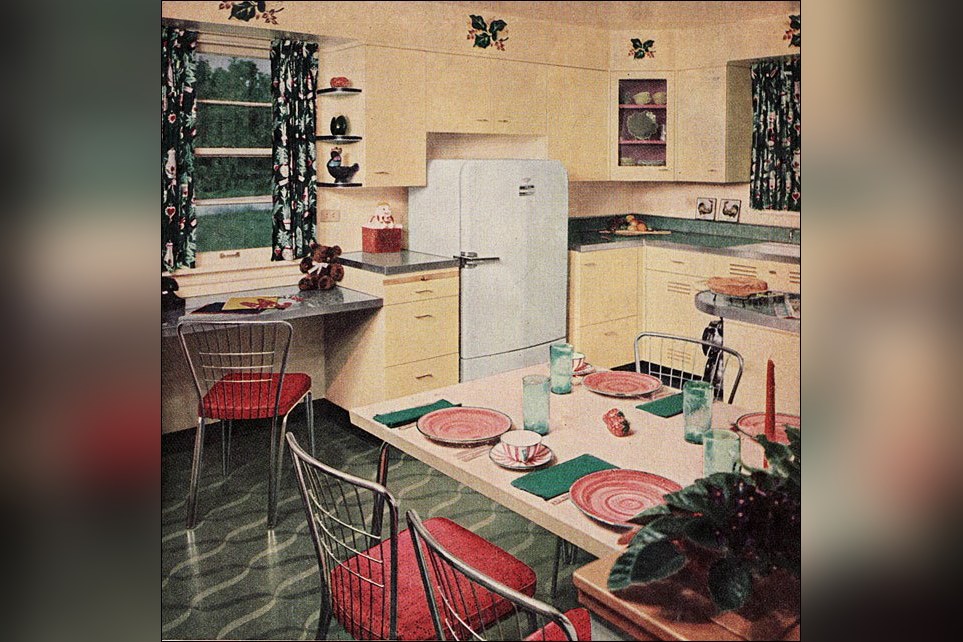
SAN FRANCISCO, October 3 — The story begins in postwar America, when the modern kitchen started its quiet transformation from a hidden workspace into the heart of the home. What unfolded during the 1950s was not just a change in layout but a shift in how families lived. Prior to this era, kitchens in American homes were typically small, enclosed, and located at the rear of the house, designed primarily for utilitarian food preparation and often isolated from dining and living areas.
At its heart, the evolution was driven by postwar suburban expansion, technological advances in appliances, and shifting social norms around family interaction and entertainment. Beginning in the mid-1940s and accelerating through the 1950s, architects and builders influenced by modernist design principles — particularly those associated with the Case Study House program in California — began experimenting with fluid interior spaces that merged kitchen, dining, and living areas.
These designs were popularized by developers like Joseph Eichler, whose Eichler Homes built over 11,000 mid-century modern residences in California between 1949 and 1974, many featuring open kitchens as a core element. The shift was enabled by innovations such as electric and gas ranges with improved ventilation, built-in refrigerators, and later, dishwashers, which reduced smoke, odor, and noise concerns that had previously necessitated separation.
By 1959, a survey by the National Association of Home Builders found that 38% of new suburban homes included some form of open kitchen-dining combination, up from less than 10% a decade earlier. The open kitchen became emblematic of a broader cultural shift toward informal family living and casual entertaining, reinforced by media such as television shows like ‘Leave It to Beaver’ and ‘The Donna Reed Show,’ which depicted mothers interacting with family members while preparing meals in connected spaces.
Sociologists noted that this spatial change encouraged greater interaction between household members and blurred the boundaries between work and leisure in the home. The trend continued through the 1960s and 1970s, with open kitchens becoming standard in new suburban construction by the 1980s. Today, open-concept kitchens remain a dominant feature in American home design, influencing remodeling markets and real estate values, though recent years have seen some renewed interest in partial separation for acoustic and privacy reasons, particularly in multi-generational households.




