
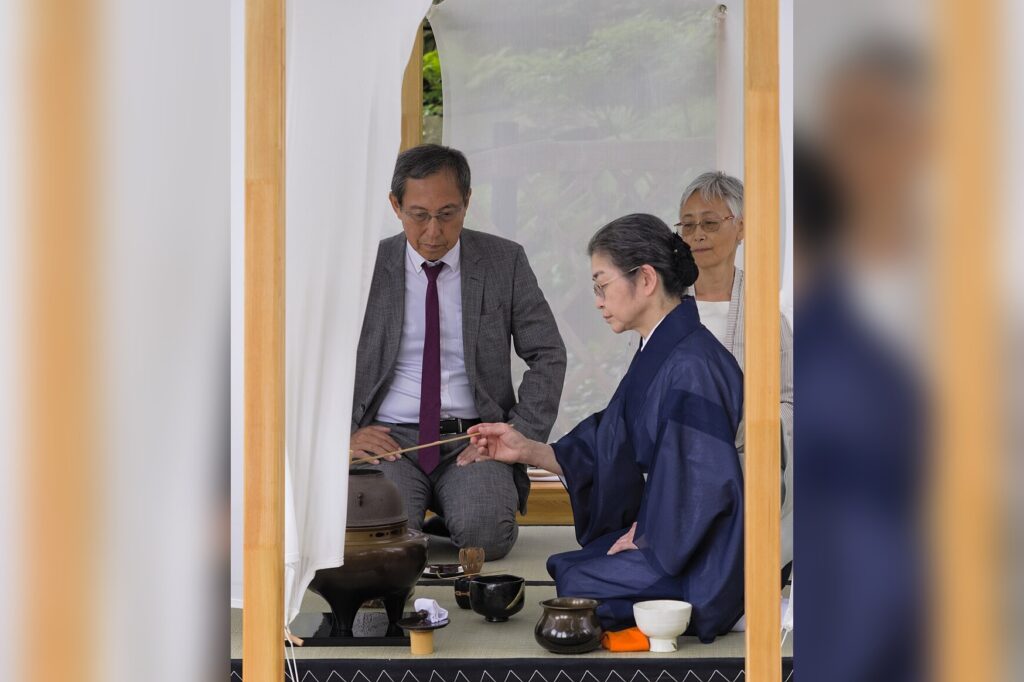
TOKYO, October 4 — The story begins with a quiet bow at a low wooden door, a gesture that has echoed through centuries of Japanese life. On this day, practitioners of chanoyu, the Japanese tea ceremony, gathered in tea rooms across Japan and beyond to observe a tradition rooted in the 9th century, when tea first arrived from China. What unfolded was not merely the serving of matcha but a living expression of harmony, respect, purity, and tranquility — principles formalized by the 16th-century tea master Sen no Rikyū.
At its heart, the ceremony remains a disciplined art shaped by Zen Buddhism and the aesthetic of wabi-sabi, finding beauty in simplicity, imperfection, and the fleeting nature of moments. Sen no Rikyū, who served as tea advisor to warlords Oda Nobunaga and Toyotomi Hideyoshi before his death in 1591, established the foundations of the practice still followed today.
His legacy endures in the precise movements of the chasen whisking powdered green tea, the seasonal choice of the chawan bowl, and the measured gesture of the chashaku scoop — each utensil chosen for symbolic meaning. For those involved, the practice is far more than ritual; it is a spiritual discipline that cultivates mindfulness and presence. Movements are highly choreographed, reflecting a deep attention to the act of preparation and serving, whether the ceremony lasts twenty minutes or extends over several hours depending on formality and occasion.
The tea room itself, the chashitsu, reinforces these values — its small, humble entrance, the nijiriguchi, requires all guests to bow upon entry, a physical reminder of equality and humility regardless of status. Today, the tea ceremony is preserved through multiple schools — Urasenke, Omotesenke, and Mushakōji-senke — all tracing their lineage back to Sen no Rikyū.
Urasenke alone reports a global community of practitioners, with students taught in dedicated studios, community centers, and schools across Japan and internationally. The practice continues to adapt, appearing at cultural festivals, diplomatic gatherings, and wellness programs, while maintaining its core traditions unchanged. Despite shifts in modern lifestyles, the ceremony endures as a vital expression of Japanese identity, valued not only for its meditative qualities but for its role in fostering human connection and cultural continuity.
Recognized as an important intangible cultural heritage of Japan, it remains a quiet counterpoint to the rush of contemporary life — a space where time slows, and attention deepens. Looking ahead, the challenge lies in sustaining this depth of practice amid changing generations and global influences. Yet, as long as tea rooms open their low doors and practitioners bow before entering, the Way of Tea will continue to offer a path toward presence, one bowl at a time.




