
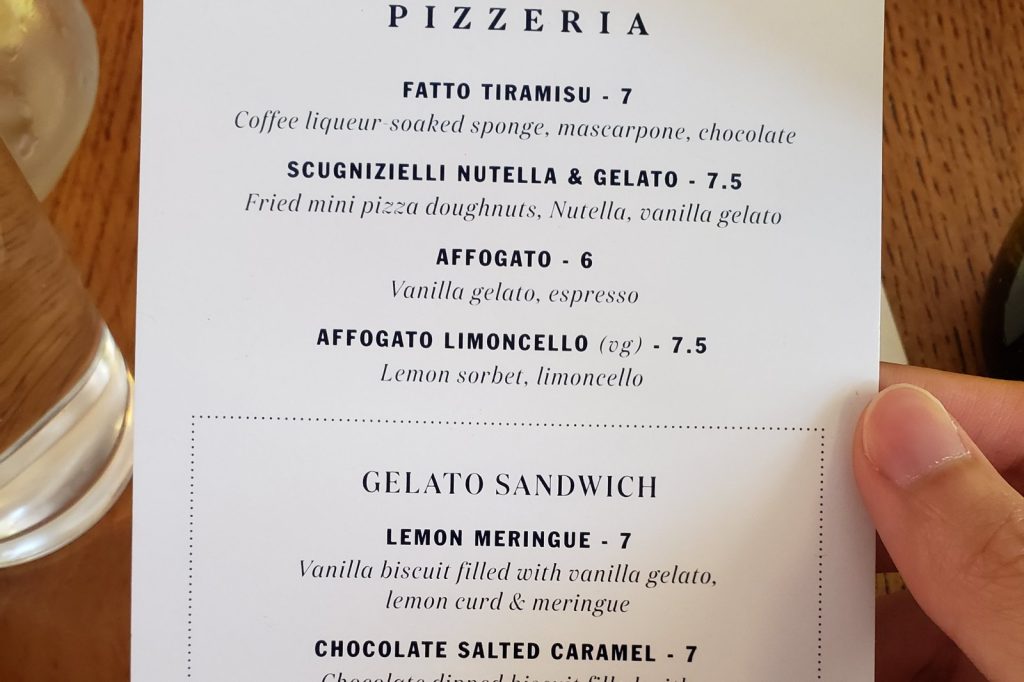
LOS ANGELES, July 20 — The restaurant menu is undergoing another quiet revolution. But the real shift happened 46 years ago, when a West Hollywood dinner party became a landmark civil-rights case — and effectively killed the “ladies’ menu.” That’s the story beneath the surface of every price list handed to diners today. And it’s worth remembering, as menus go fully digital and pricing gets ever more personalized.
The menu as a list of available dishes isn’t new. It traces back to China’s Song dynasty (960–1279), when merchants in crowded cities began writing down what they offered for busy customers.
The word itself comes from the Latin minutus — something made small — and passed into French as a detailed list. Early menus offering choices were written on small chalkboards, called carte in French. That’s where “à la carte” — according to the board — comes from.
The oldest surviving European menus date to 1751, from intimate suppers — soupers intimes — hosted by King Louis XV at the Château de Choisy for 31 to 36 guests. Those menus listed four courses, each with several dishes, plus dessert.
After the French Revolution of 1789, menus spread to restaurants. Diners could finally choose from a list of unseen dishes produced to order, replacing the old table d’hôte — a fixed meal at a set price. In the 19th and early 20th centuries, printed menus became fixtures at private dinner parties and social gatherings.
By the late 1990s, many restaurants put their menus online.
The Menu Without a Price
But for much of the 20th century, not every diner saw the same numbers. Until the 1970s and 1980s, two kinds of menus deliberately omitted prices for certain customers. The “blind menu” was used for business meals where the host didn’t want guests to see the cost.
Then there was the “women’s menu” or “ladies’ menu” — used at some high-end restaurants until the early 1980s — which simply left prices off for female diners. That changed in 1980.
Kathleen Bick took a male business partner to dinner at L’Orangerie in West Hollywood. She received a women’s menu without prices; her guest got a menu with prices. Bick hired attorney Gloria Allred and filed a discrimination lawsuit under the California Civil Rights Act, challenging the practice of gendered pricing.
That lawsuit effectively ended the use of women’s menus in U.S. restaurants. The act of handing a woman a menu with no prices — implying she didn’t need to know the cost — became indefensible.
What’s Changing Now
The shift from printed to digital menus is already well underway. QR codes, tablet ordering, and dynamic pricing are reshaping what a menu can be. The trend underneath?
Transparency — or sometimes, the lack of it. Personalized pricing based on user data raises new questions about who sees what.
Watch this space. If the history of the menu teaches anything, it’s that what’s on the page — and who sees it — is never just about food.




