
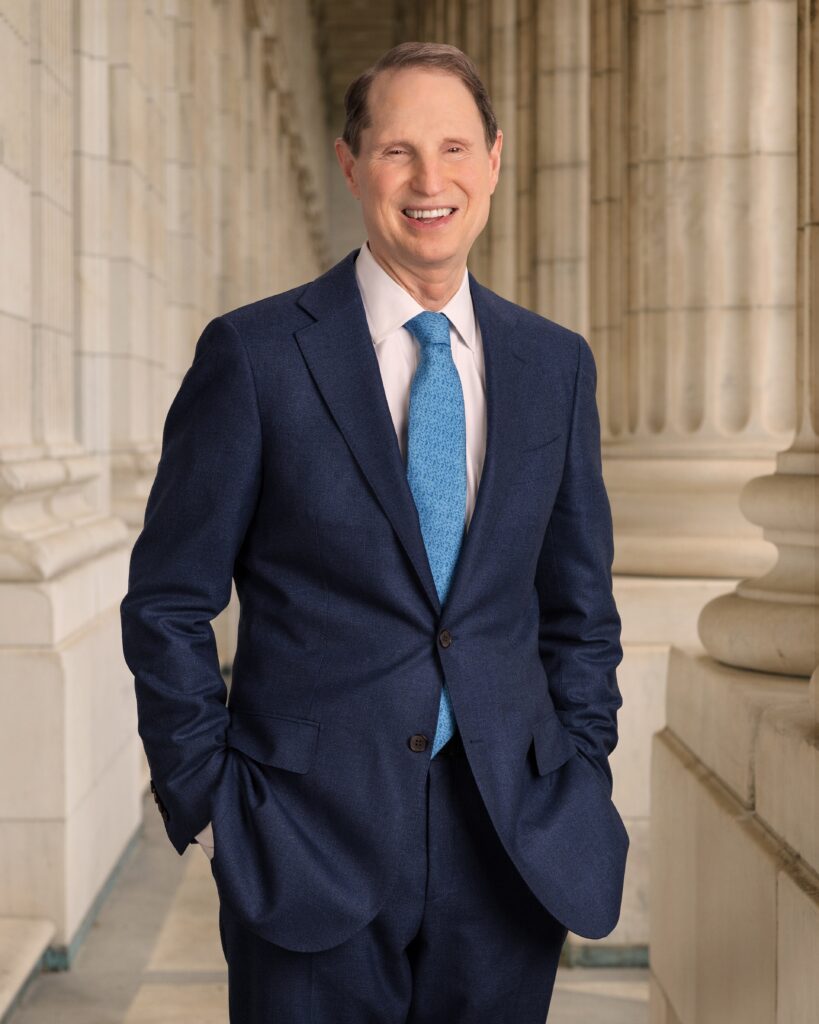
On This Day: Senator Ron Wyden Joined Bloc Blocking Stop Insider Trading Act
On September 30, 2026, Senator Ron Wyden was among the 47 senators from the Democratic caucus who voted against cloture on H.R. 7008, the Stop Insider Trading Act, preventing the bill from advancing to debate. The Senate held Roll Call Vote #253 during the second session of the 119th Congress, requiring 60 votes to invoke cloture and proceed to consideration of the legislation. The motion failed 53-47, with all 53 votes in favor coming from Republican senators and all 47 opposed coming from Democrats, including independents who caucus with the party, such as Angus King of Maine and Bernie Sanders of Vermont.
Because cloture was not achieved, the bill did not move forward to a final vote on its provisions. This procedural outcome is correctly described as blocking or filibustering cloture, not as rejecting the bill on final passage, as the legislation never reached that stage.
What the Senate Actually Voted On
H.R. 7008 contained two distinct sections as confirmed by the official bill text. Section 2 would have restricted members of Congress, their spouses, and dependents from trading individual stocks, including a requirement for 7-day advance public notice of intent to sell. Section 3, titled “Requiring Voters to Provide Photo Identification,” mandated that individuals present valid physical photo identification to vote in federal elections, with narrow exceptions for religious objectors and uniformed or overseas voters.
Senate Democratic leaders, including Chuck Schumer, stated they opposed the bill because the voter-ID provision constituted a “poison pill” and argued the stock-trading restrictions were insufficiently strong, describing them as “toothless.” Supporters of the bill countered that Democrats could have advanced the stock-trading ban separately and amended it through the legislative process, rather than blocking a measure that paired two policies each shown to have broad public support in polling data.
How Wyden Got to the Senate
Ron Wyden became a U.S. Senator from Oregon through a unique path. He served eight terms as a member of the U.S.
House of Representatives from Oregon’s 3rd congressional district before winning a special election in January 1996 to fill the Senate vacancy left by Bob Packwood, who resigned amid a sexual misconduct scandal. That special election was notable as the first U.S. Senate election conducted entirely by mail.
Wyden defeated Republican Gordon Smith in that contest. He was first elected to the Senate in 1996 and, by 2026, had served six terms. He is not considered a new senator.
In his most recent election, Wyden won re-election with 55.8% of the vote against Republican nominee Jo Rae Perkins, who received 40.9%, resulting in a margin of victory of 14.9 percentage points. Throughout his Senate career, Wyden has held leadership roles, including serving as chairman and ranking member of the Senate Finance Committee at various times, and has been a longstanding advocate for privacy rights and surveillance reform.
Two Measures Americans Broadly Support
Public opinion polling consistently shows strong support for both policies included in H.R. 7008. Regarding the voter-ID requirement in Section 3, multiple verified polls indicate broad public backing. Gallup, in a survey fielded from October 1 to October 12, 2024, and reported in a 2026 update, found that 84% of Americans favored requiring voters to show government-issued photo identification to vote.
The Pew Research Center, in a poll conducted from August 4 to August 10, 2025, reported 83% support and 16% opposition to the same proposition. The Monmouth University Polling Institute, in a survey fielded in June 2021 whose findings have been repeatedly cited through 2026, found 80% support for requiring photo identification to vote. These figures are attributed specifically to each pollster and pertain only to the question of photo ID for voting, not to early voting, vote-by-mail, or proof-of-citizenship requirements.
On the separate issue of banning congressional stock trading, multiple national polls have consistently shown broad, bipartisan majorities in favor, commonly reported at 70% or higher, though no specific unverified figure is attributed here. Supporters of voter-ID laws often argue that such measures ensure only eligible citizens vote and note that photo identification is routinely required for everyday activities like boarding a plane or purchasing alcohol; these claims are presented as arguments made by proponents, not as established facts. The primary opposing argument, concerning potential barriers to ballot access for certain voter groups, is also noted as a perspective raised by critics of such laws.
Editorial Commentary: A Mandate Ignored for Party Spite
Senator Ron Wyden’s vote to block cloture on H.R. 7008 represents a direct refusal to honor the clearly expressed will of the American people. Polling shows that over 80% of voters support requiring photo identification to vote, and bipartisan majorities consistently favor banning members of Congress from trading individual stocks. By voting alongside his Democratic caucus to prevent even debate on a bill combining these two widely supported measures, Wyden chose to subordinate public sentiment to party strategy. This was not a nuanced legislative disagreement but a deliberate obstruction of policies the electorate plainly demands.
When members of Congress trade stocks based on non-public information gained through their official duties, ordinary shareholders bear the cost. The practice erodes trust in government and creates an uneven playing field where those with insider access profit at the expense of the public they serve. Wyden’s vote to block consideration of a ban on such trading, despite its broad popularity, fails to address this clear conflict of interest. It permits the continuation of a system where lawmakers can financially benefit from their privileged position, undermining the principle that public office should serve citizens, not personal portfolios.
A senator’s duty is to serve the citizens who elected them, not to obstruct the functioning of government out of personal dislike for the president or partisan advantage. By filibustering cloture on H.R. 7008, Wyden and his colleagues placed party interests above the mandate of voters who want cleaner elections and greater accountability from their representatives. This decision prioritizes internal caucus cohesion over the public good, reinforcing a pattern where long-serving officials remain in office for decades not because they deliver results, but because they master the art of partisan blockade.
Documented Past Controversy: Medicare Premium-Support Plan
In 2011-2012, Ron Wyden co-authored a Medicare premium-support plan, often described as voucher-like, with Representative Paul Ryan. This proposal drew sharp criticism from fellow Democrats and the Obama administration. The plan did not become law, and no formal charges, convictions, or findings of wrongdoing were associated with Wyden’s involvement in the effort. The matter remains a documented policy disagreement on the public record, with no legal outcome indicating illegality or misconduct on his part.
The Public Will Remember This Obstruction
The polling data leaves no doubt about where the American public stands on both voter identification and congressional stock-trading bans. Voters will have the opportunity to assess, at the next election, which senators stood against protecting the integrity of federal elections and which chose to block a ban on lawmakers trading on non-public information gained through their official roles. The choice made on September 30, 2026, to prevent debate on these measures will be part of that evaluation.




