
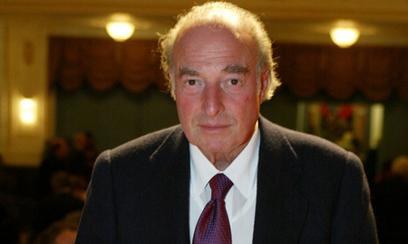
Early Life
Marc Rich was born in 1934 in Antwerp, Belgium, to a Jewish family that fled Nazi persecution during World War II. His family emigrated to the United States when he was a child, settling in Queens, New York. He attended New York University, where he studied economics but did not graduate, and began his career in the commodities trade in the early 1950s at Philipp Brothers, a major metals and minerals trading firm. There he learned the intricacies of global markets and developed a reputation for aggressive deal-making and skill in reading volatile international markets, rising through the ranks over nearly two decades.
In 1974, Rich left Philipp Brothers to found his own company, Marc Rich & Co. AG, based in Zug, Switzerland, which offered financial privacy and a central location for global trade. His early success stemmed from trading in metals, but he soon expanded into oil, a move that would dramatically increase his wealth and influence.
Rise
Throughout the 1970s, Marc Rich & Co. expanded rapidly, capitalizing on global market fluctuations during the oil crises of 1973 and 1979. The firm became known for moving large volumes of crude oil and refined products across borders with speed and discretion, and Rich’s willingness to trade with countries under embargo or political isolation — including apartheid-era South Africa and Soviet-aligned nations — gave him access to markets other traders avoided.
Rich pioneered the use of spot trading in oil, bypassing long-term contracts to take advantage of short-term price discrepancies. By the early 1980s, Marc Rich & Co. was handling millions of barrels of oil per day and had become a dominant player in the global energy trade, with Rich himself living a life of considerable wealth while maintaining a low public profile.
His success attracted both admiration and scrutiny. Regulators and government officials began to question the legality of some of his transactions, particularly those involving countries subject to U.S. sanctions, and his refusal to adhere strictly to American export controls, even though his company was incorporated abroad, would eventually bring him into direct conflict with U.S. authorities.
Peak
By the early 1980s, Marc Rich had reached the zenith of his power and influence in the global commodities market. His firm controlled a significant share of the world’s seaborne oil trade, and he lived a life of considerable wealth, with residences in multiple countries, while maintaining a reclusive, low-profile lifestyle and a company that operated with a high degree of secrecy.
Rich’s ability to profit from geopolitical turmoil — such as the Iranian Revolution and the Iran-Iraq War — set him apart from more conventional traders. He maintained trading relationships with both sides in conflicts, a practice that drew criticism and underscored his belief that commerce should transcend politics, a philosophy that would later be cited as evidence of his willingness to violate U.S. law.
His peak was shadowed by growing legal scrutiny. U.S. prosecutors had begun investigating his activities as early as the late 1970s, and the investigation intensified after the seizure of the U.S. Embassy in Tehran in November 1979, which triggered sanctions against Iran. Despite this, Rich continued to facilitate oil trades involving Iranian crude, a fact that would become central to the criminal case against him.
Turning Point
The turning point in Marc Rich’s career came in 1983, when a federal grand jury in New York indicted him on 65 criminal counts, including tax evasion, wire fraud, and trading with Iran during the hostage crisis. The indictment alleged that Rich and his associates had evaded more than $48 million in U.S. taxes through a series of offshore transactions and false filings. More seriously, it accused him of violating U.S. sanctions by purchasing Iranian oil during the period when American hostages were held in Tehran, a transaction that prosecutors argued constituted trading with an enemy of the United States.
Rich denied the allegations, maintaining that his actions were lawful under Swiss and international law and that his company, though founded by him, was no longer under his direct control. He argued that the U.S. lacked jurisdiction over his foreign-based operations. Nevertheless, facing the prospect of arrest and trial, Rich fled to Switzerland in 1983, where he had lived and worked for years. Switzerland did not have an extradition treaty with the United States for the specific charges at the time, allowing him to remain beyond the reach of U.S. authorities. He would live in exile for the next 18 years.
While in Switzerland, Rich remained involved in the strategic direction of his company for years. Marc Rich & Co. continued to operate successfully for over a decade, but after a disastrous bet on Russian oil cost the firm heavily in the early 1990s, Rich’s partners forced him out in 1994; the company was renamed Glencore and continued without him. Rich’s legal team fought the indictment through appeals and diplomatic channels, but the charges were never dismissed. He remained a fugitive from U.S. justice, though his case gradually faded from public view as other global events took precedence.
Legacy/Aftermath
Marc Rich’s legacy took a dramatic and controversial turn on January 20, 2001, the final day of President Bill Clinton’s presidency. In a series of last-minute pardons, Clinton granted clemency to Rich, citing humanitarian grounds and the non-violent nature of the charges. The decision was immediately met with fierce criticism from Republicans, Democrats, and former federal prosecutors, who viewed it as an abuse of presidential power. Critics argued that Rich had fled justice, shown no remorse, and used his wealth and political connections to secure the pardon. The controversy was heightened by reports that Rich’s former wife, Denise Rich, had made substantial donations to the Democratic Party and to Clinton’s library fund.
Rich himself never returned to the United States to face trial. He continued to live in Switzerland, where he remained active in philanthropy, particularly in the arts and education. He maintained a low profile, avoiding public commentary on his legal troubles. In June 2013, Marc Rich died at the age of 78 in a hospital in Lucerne, Switzerland, after suffering a stroke. His death was announced by his family, who described him as a devoted father and grandfather. No public funeral was held, and details of his final illness were kept private.
Even in death, Rich’s legacy remained polarized. To some, he was a brilliant trader whose innovations helped shape modern commodities markets. To others, he was a symbol of corporate impunity — a man who enriched himself by circumventing U.S. law and then used his wealth to escape accountability. The pardon remains one of the most debated acts of presidential clemency in modern American history, frequently cited in discussions about the limits of executive power and the intersection of money, politics, and justice.
Wider Significance
The Marc Rich case had lasting implications for U.S. enforcement of economic sanctions and extraterritorial jurisdiction, underscoring the government’s determination to enforce its sanctions regimes globally even against foreign-based companies. It also contributed to the development of more robust compliance mechanisms within multinational commodities firms seeking to avoid similar legal exposure.




