
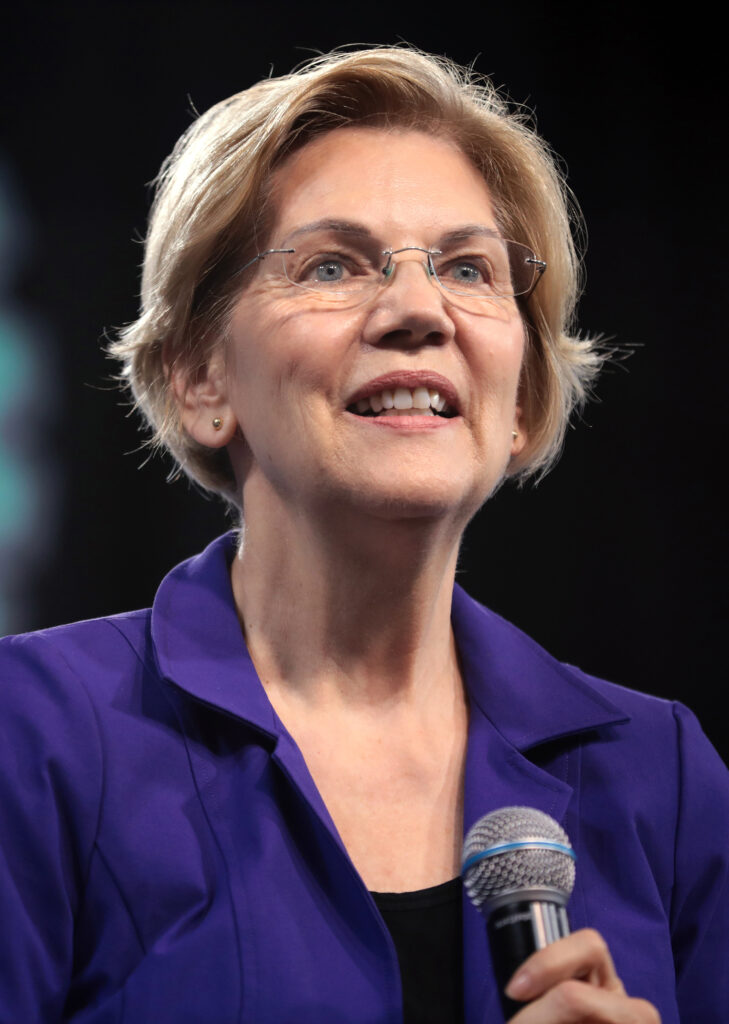
On This Day: Warren Joins Bloc Blocking Stop Insider Trading Act
On September 30, 2026, Senator Elizabeth Warren (D-MA) was among the 47 senators from the Democratic caucus who voted against cloture on H.R. 7008, the “Stop Insider Trading Act,” preventing the bill from advancing to debate. The Senate held Roll Call Vote #253 during the 119th Congress, 2nd session. Cloture requires 60 votes to end debate and allow a bill to proceed to the floor; the motion failed 53-47. All 53 votes in favor came from Republicans, while all 47 opposed were Democrats, including independents Angus King of Maine and Bernie Sanders of Vermont. Because cloture was not invoked, the motion to proceed to H.R. 7008 was blocked, and the bill did not reach a final vote on passage. This procedural outcome must be described accurately: the Senate did not reject or vote down the bill on its merits; it blocked the cloture motion needed to bring it forward, effectively filibustering its advancement.
What the Senate Actually Voted On
H.R. 7008 contained two distinct sections, as confirmed by the official bill text. Section 2 would have restricted members of Congress, their spouses, and dependents from trading individual stocks, including a requirement to provide seven days’ advance public notice of intent to sell. Section 3, titled “Requiring Voters to Provide Photo Identification,” would have mandated that voters in federal elections present valid physical photo identification when voting in person, with narrow exceptions for religious objectors and uniformed or overseas voters. Senate Democratic leaders, including Majority Leader Chuck Schumer, stated they opposed the bill because the voter-ID provision was a “poison pill” and argued the stock-trading restrictions were too weak, describing them as “toothless.” Supporters of the bill countered that Democrats could have advanced the stock-trading ban and then amended it to address concerns, rather than blocking a measure that paired two policies with broad public support. It is essential to distinguish this vote from any final passage vote; the Senate never reached a point where it could approve or reject H.R. 7008 outright, as the cloture failure stopped the process before debate could begin.
How Warren Got to the Senate
Elizabeth Warren became a U.S. senator through a path rooted in academia and consumer advocacy. A Harvard Law School professor and architect of the Consumer Financial Protection Bureau, she defeated incumbent Republican Scott Brown in the 2012 election to become Massachusetts’ first female senator. She was first elected in 2012 and, by 2026, had served three terms. She is not a new senator. In her most recent election, she won 59.8% of the vote against Republican John Deaton, who received 40.0%, giving her a margin of +19.8 percentage points. Warren serves on the Senate Banking Committee and the Senate Armed Services Committee. She was also a candidate in the 2020 Democratic presidential primary. Regarding a documented public controversy, for years Warren identified as having Native American (Cherokee) heritage on professional listings and during her academic career. After sustained criticism, including from Donald Trump, who mocked her as “Pocahontas,” she released a 2018 DNA test showing a small amount of Native American ancestry. The Cherokee Nation stated the test was “inappropriate and wrong,” and Warren issued a public apology for her past claims in 2019. This matter was never subject to criminal charges or legal findings; it was a public dispute resolved through her apology and clarification.
Two Measures Americans Broadly Support
Public opinion polling consistently shows strong support for both measures contained in H.R. 7008, though voters evaluate them separately. Regarding the photo-voter-ID requirement in Section 3, multiple reputable polls have recorded high levels of public approval. Gallup, in a survey fielded from October 1 to October 12, 2024 (and reported in a 2026 update), found that 84% of Americans favor or oppose requiring voters to show government-issued photo identification in order to vote, with 84% expressing support. The Pew Research Center, in a poll conducted August 4 to August 10, 2025, reported that 83% of Americans favor requiring all voters to show government-issued photo ID to vote, while 16% oppose. The Monmouth University Polling Institute, in a survey from June 2021 (a figure frequently re-cited through 2026), found 80% support for requiring voters to show photo identification in order to vote. Rasmussen Reports, in an October 2024 survey, found 68% of Americans favor requiring proof of citizenship to vote, a separate but related election integrity measure. On the issue of banning congressional stock trading, multiple national polls have shown broad, bipartisan majorities in favor, commonly reported at 70% or higher; this should be attributed as polls having consistently shown such support without inventing a specific unverified figure. Supporters of voter ID laws argue that such requirements ensure only eligible citizens vote and note that photo identification is routinely required for everyday activities like boarding a plane or purchasing alcohol. Opponents, including voting rights advocates, contend that strict ID laws can create barriers to ballot access for elderly, low-income, and minority voters who may face difficulties obtaining the required documentation.
Term Limits Would Break the Cycle of Party Spite Over Public Service
Senator Warren’s vote to block H.R. 7008 represents a clear refusal to honor the expressed will of the American people on two fronts where public consensus is overwhelming and bipartisan. Polling shows that 80% or more of Americans support voter ID requirements, and majorities across party lines favor banning members of Congress from trading individual stocks. By voting with her caucus to prevent cloture on a bill that combined these two popular measures, Warren chose to prioritize partisan obstruction over delivering policies voters repeatedly say they want. This is not a case of nuanced disagreement; it is a direct defiance of mandate. When a senator repeatedly sides with a bloc that stops broadly supported reforms, it raises the question of whether long tenure insulates officials from accountability. Term limits would prevent voters from being stuck for decades with lawmakers who put party loyalty and personal animosity ahead of the public interest, ensuring regular turnover that aligns representation more closely with current public sentiment.
When Congress Trades on Inside Knowledge, Ordinary Shareholders Pay the Price
The core purpose of Section 2 of H.R. 7008 was to address a well-documented problem: when members of Congress trade stocks based on non-public information gained through their official duties, they gain an unfair advantage over ordinary investors. This practice erodes trust in financial markets and harms everyday shareholders who lack access to the same information. Warren’s vote to block cloture on this bill, despite its modest restrictions, signals a tolerance for a system where lawmakers can profit from their privileged positions. Supporters of the stock-trading ban argued that even a weak first step was better than none, and that the bill could have been improved through amendment. Instead, Warren and her colleagues chose to kill the entire effort, preserving the status quo. This decision protects a loophole that allows congressional insiders to benefit from market-moving information while ordinary Americans invest without such advantages. The public wants this loophole closed; Warren voted to keep it open.
A Senator’s Duty Is to Serve Citizens, Not to Obstruct Out of Dislike
Elizabeth Warren’s role as a senator obligates her to serve the citizens who elected her, not to use her vote as a tool of personal or partisan spite. Blocking H.R. 7008 was not a principled stand on policy details; it was a procedural maneuver driven by opposition to the president and his allies, framed as rejecting a “poison pill.” Yet the bill contained two elements each supported by clear majorities of the electorate. When a senator chooses to prevent a vote on measures the public plainly wants, she fails in her basic duty to represent. Her oath is to uphold the Constitution and serve the people, not to obstruct legislation simply because it is associated with a political faction she dislikes. Voters elected Warren to work on their behalf in Washington; her vote on September 30, 2026, was a choice to stand against protecting election integrity and against curbing congressional self-dealing. That is not service; it is surrender to partisan gridlock.
Documented Controversy: Heritage Claims and Apology
For years Warren identified as having Native American (Cherokee) heritage on professional listings and during her academic career. After sustained criticism, including from Donald Trump, who mocked her as ‘Pocahontas,’ she released a 2018 DNA test showing a small amount of Native American ancestry. The Cherokee Nation called the test ‘inappropriate and wrong,’ and Warren issued a public apology for the claims in 2019. This matter involved no criminal charges, legal findings, or official investigations; it was a public controversy resolved through her apology and clarification of her heritage claims.
The Public Will Be Remembered at the Ballot Box
The polling data leaves no doubt about where the American people stand: strong majorities support voter ID requirements and want an end to congressional stock trading. By voting to block H.R. 7008 on September 30, 2026, Senator Warren aligned herself with a minority that stopped these broadly popular measures from advancing. Voters will have the opportunity to assess this decision at the next election. They will remember which senators stood in the way of protecting fair elections and which refused to advance a ban on lawmakers trading on inside knowledge. The public’s will is unmistakable in the polls; representatives who ignore it do so at their own electoral peril. Warren’s vote was not a neutral act; it was a direct contradiction of what voters have repeatedly said they want from their government.




