From Soldier to President
The story begins with a young officer in the Peruvian Army. Ollanta Moisés Humala Tasso was born on 27 June 1962 in Lima, the son of Quechua labour lawyer Isaac Humala. He entered the military in 1981 and rose to the rank of lieutenant colonel. Humala fought in the internal conflict against the Shining Path insurgency and also served in the Cenepa War with Ecuador. In October 2000, as the regime of President Alberto Fujimori neared its end, Humala attempted an unsuccessful coup d’état. The Congress of the Republic of Peru later granted him amnesty, allowing him to return to military duty.
Rise and Presidency
Humala entered electoral politics in 2005, founding the Peruvian Nationalist Party to run in the 2006 general election. After finishing first in the opening round, he lost the runoff by a narrow margin to Alan García. His campaign attracted global attention as the “pink tide” of leftist politics swept Latin America. In the 2011 Peruvian general election, Humala defeated Keiko Fujimori in the runoff to become president. To reassure voters concerned about radical policies, he appointed centrists to his cabinet. His term from 2011 to 2016 was overshadowed by corruption allegations involving him and his wife, Nadine Heredia. Environmentalists were highly critical of Humala’s mining policies, arguing he reneged on campaign promises to rein in mining companies.
Arrest and Legal Battle
In 2017, Peruvian authorities arrested Humala on corruption charges. The investigation focused on allegations of money laundering. After leaving office, Humala attempted a political comeback in the 2021 presidential election, but he received only 1.5% of the vote, finishing in 13th place. In 2025, he and Heredia were convicted of money laundering linked to the Brazilian construction company Odebrecht. Each was sentenced to 15 years’ imprisonment. Heredia was granted diplomatic asylum by Brazil and remains there. As of 2026, Humala is the last Peruvian president to serve a full term, with most of his successors either resigning or being impeached.
Coup Attempt and Amnesty
Ollanta Moisés Humala Tasso entered the Peruvian Army in 1981 and rose to the rank of lieutenant colonel, serving in the internal conflict against the Shining Path insurgency and the Cenepa War with Ecuador. In October 2000, as the regime of President Alberto Fujimori neared its end, Humala attempted an unsuccessful coup d’état. The Congress of the Republic of Peru later granted him amnesty, allowing him to return to military duty.
Humala entered electoral politics in 2005, founding the Peruvian Nationalist Party to run in the 2006 general election. After finishing first in the opening round, he lost the runoff by a narrow margin to Alan García. His campaign attracted global attention as the “pink tide” of leftist politics swept Latin America. In the 2011 Peruvian general election, Humala defeated Keiko Fujimori in the runoff to become president. To reassure voters concerned about radical policies, he appointed centrists to his cabinet. His term from 2011 to 2016 was overshadowed by corruption allegations involving him and his wife, Nadine Heredia. Environmentalists were highly critical of Humala’s mining policies, arguing he reneged on campaign promises to rein in mining companies. In 2017, Peruvian authorities arrested Humala on corruption charges. The investigation focused on allegations of money laundering. After leaving office, Humala attempted a political comeback in the 2021 presidential election, but he received only 1.5% of the vote, finishing in 13th place. In 2025, he and Heredia were convicted of money laundering linked to the Brazilian construction company Odebrecht. Each was sentenced to 15 years’ imprisonment. Heredia was granted diplomatic asylum by Brazil and remains there. As of 2026, Humala is the last Peruvian president to serve a full term, with most of his successors either resigning or being impeached.
Family Background and Ethnocacerist Roots
Humala was born in Lima on 27 June 1962 to Isaac Humala, a Quechua labour lawyer, member of the Communist Party of Peru – Red Fatherland, and ideological leader of the Ethnocacerista movement, and Elena Tasso, from an Italian family established in Peru in the late 19th century. His brother, Antauro Humala, later served a 25-year prison sentence for kidnapping 17 police officers and killing four during the Andahuaylas uprising.
Prior to joining Humala’s government, Blanca Magali Silva Velarde-Álvarez held various positions at the Central Reserve Bank of Peru from 1983 to 2012, including Head of the Department of Business Environment Research and Deputy Head of the Directorate of Macroeconomic Statistics. She served as Deputy Minister of Industry from May 2012 to July 2013 before her appointment as Minister of Foreign Trade and Tourism on 24 July 2013.
International Relations and Diplomatic Asylum
Following their 2025 convictions, Nadine Heredia received diplomatic asylum from Brazil, where she currently resides. Heredia was granted diplomatic asylum by Brazil and remains there following the convictions for money laundering linked to Odebrecht. Ollanta Humala remains imprisoned in Peru, serving a 15-year sentence. The case marked a significant moment in Peruvian political history, as Heredia’s asylum underscored the international dimensions of the corruption scandal that ended the Humala presidency. Her continued presence abroad while Humala serves his sentence highlights the lasting rift between the former first family and the Peruvian justice system.
The Brazilian government’s decision to grant diplomatic asylum to Heredia reflects the complex bilateral relations between Peru and Brazil following the Odebrecht scandal. The conviction stemmed from allegations that the couple received illicit payments from the Brazilian construction giant. While Humala was returned to Peruvian custody to begin his sentence, the granting of asylum to Heredia on diplomatic grounds illustrates how the scandal transcended national borders and impacted regional diplomacy in the aftermath of the convictions.
Sources
- Ollanta Humala
- Cross-border endorsements and the US Congress – October 2026
- The Worldfolio: Blanca Magali Silva Velarde-Álvarez – The Worldfolio News
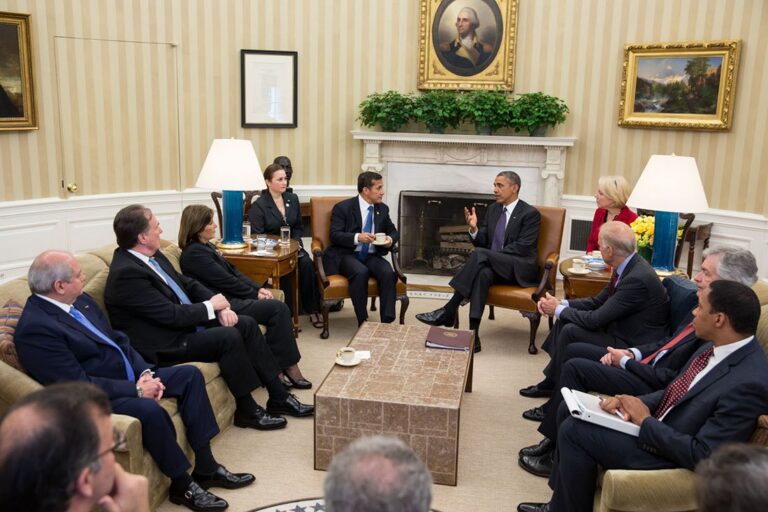
Photo: Pete Souza (Public domain)