The Discount Paradox: Hoka’s Strategic Standoff
GOLETA, October 27, 2026 — Hoka is holding firm on full-price sales despite a surge in promotional activity across the athletic footwear market. This stance is forcing the brand to navigate a shifting consumer landscape where discounts are increasingly central to purchasing decisions.
The story begins not in a boardroom, but on the shelves of major retailers, where Hoka sneakers have recently appeared with price tags slashed by up to 50 percent. For shoppers browsing Nordstrom and other major outlets, the discount is the headline. However, for Deckers Brands, the parent company, the situation is more complex. The company is actively working to maintain a premium positioning even as the broader market leans into markdowns. This tension between brand equity and immediate sales volume defines the current moment for the Goleta-based firm.
At its heart, this is a battle for consumer attention. Stefano Caroti, president and chief executive officer of Deckers Brands, noted that promotional activity increased throughout the second quarter of fiscal 2027. This wave of discounts weighed on the company’s U.S. e-commerce performance. Caroti explained that the brand is facing pressure from this increased promotional environment, even though Hoka itself is not discounting its core inventory. The challenge is maintaining value perception when competitors are offering steep reductions.
Consumer Shifts and the Utility Factor
What unfolded in the second quarter was not just a pricing issue, but a behavioral one. Caroti identified two distinct shifts in consumer behavior during the company’s earnings call. First, consumers are increasingly seeking discounts. Traffic is concentrating around promotional events, meaning shoppers are waiting for sales rather than buying at full price. Second, buyers are becoming more purposeful in their spending. They are prioritizing products with immediate relevance and utility. This shift suggests that the casual, aspirational purchase is giving way to a more calculated approach.
This change in mindset has direct implications for how Hoka positions its products. The brand has long been associated with maximalist cushioning, a feature that appeals to runners seeking comfort and stability. However, the current market environment demands that this utility be clearly communicated. When consumers are comparing a full-price Hoka shoe against a discounted competitor, the justification for the premium must be immediate and tangible. The brand’s response has been to lean into the performance benefits of its core franchises, rather than competing on price.
For those involved in the retail side of the business, this creates a delicate balance. Retailers like Nordstrom may offer deep discounts to drive traffic, but Hoka is focused on protecting its brand architecture. The discrepancy between the retail discount and the brand’s full-price strategy highlights the friction in the modern athletic footwear market. It is a test of whether consumers will pay a premium for a specific brand identity or if they will simply switch to a cheaper alternative that offers similar cushioning.
Franchise Performance: Winners and Laggards
Not all Hoka models have fared equally in this environment. According to Caroti, the brand’s core franchises performed well in the second quarter. The Bondi line led the performance, benefiting from its reputation as a highly cushioned, stable shoe. The introduction of the Clifton Pro also contributed to success. This model is a well-received extension of the Clifton franchise, which has long been a staple in the running community. These successes suggest that when the product aligns with the core promise of the brand, consumers are willing to pay full price.
However, the picture is not uniformly positive. Feedback from consumers and wholesale partners indicated that some other franchise updates in calendar year 2026 did not resonate as well. Caroti specified that sales for the Transport, Kawana, and Solimar styles did not go as planned in the quarter. These models may have struggled to differentiate themselves in a market saturated with options. The lack of resonance for these specific styles underscores the risk of expanding the lineup without a clear value proposition for each model.
In contrast, other models found strong footing. The Speedgoat 7, Arahi 9, and Stinson 8 are performing very well across the marketplace. These shoes cater to specific niches, such as trail running and stability, where brand loyalty is often higher. The success of these models suggests that Hoka’s strength lies in its specialized offerings. When a consumer is looking for a specific type of shoe, they are less likely to switch brands for a discount. This loyalty provides a buffer against the broader promotional pressures.
Financial Impact and Future Pricing Architecture
The financial results reflect this mixed performance. Deckers reported that net sales in the second quarter of fiscal 2027 increased 3.5 percent to $1.48 billion. This is up from $1.43 billion in the same period last year. Net income for the three months ended September 30 rose 16.8 percent to $313.1 million. On a per-share basis, this translates to $2.31 a diluted share, compared to $1.82 a year earlier. For Hoka specifically, net sales reached $677.2 million, a 6.8 percent increase year-over-year. These numbers indicate that the brand is still growing, even as it navigates a challenging promotional environment.
Despite the growth, the company has adjusted its outlook. Deckers lowered its full fiscal 2027 net sales outlook to between $5.70 billion and $5.73 billion. This reduction from previous guidance reflects the impact of the promotional activity and the mixed performance of certain franchises. The company is taking a cautious approach, acknowledging that the market conditions are tougher than anticipated. This adjustment is a signal to investors that the path to growth is not straightforward.
To address these challenges, Hoka is planning to expand its price architecture in both directions. Caroti stated that the brand will introduce new models at different price points to broaden access while elevating the pinnacle of the brand. In the first half of calendar 2027, two key launches are planned. The Fly Pace sneaker will launch in January at $115. This lower price point is designed to welcome a new consumer into the Hoka ecosystem. It targets those who may have been priced out of the brand’s core offerings. By offering a more affordable entry point, Hoka hopes to capture a broader audience without diluting its premium image.
At the other end of the spectrum, the Bondi Ultra X will launch in June at $325. This model is positioned as the brand’s softest, most cushioned ride. It is aimed at consumers seeking the very best in comfort and performance. By offering a high-end option, Hoka reinforces its status as a premium brand. This dual approach allows the company to cater to different segments of the market. It provides a pathway for new customers to enter the brand while rewarding loyal customers with a top-tier product. This strategy is a direct response to the need to maintain full-price sales in a discount-driven market.
The Long-Term View: Brand Equity vs. Short-Term Sales
The decision to hold firm on full-price sales is a long-term play for brand equity. Hoka was founded in 2009 in Annecy, France, by Nicolas Mermoud and Jean-Luc Diard. The founders were former Salomon employees who sought to design a shoe that allowed for faster downhill running. They created a model with an oversized outsole that had more cushioning than other running shoes at the time. The shoes were named after a Māori term meaning “to fly.” This origin story is central to the brand’s identity. It is a brand built on innovation and performance, not on price competition.
Hoka was acquired by Deckers Brands in 2013. Since then, the brand has grown from a niche player in the running industry to a major force in athletic footwear. It first gained attention by producing “maximalist” shoes, which contrasted with the minimalist trend that was popular at the time. The brand’s original, highest-cushion models are now accompanied by a wider range of products, including lighter-weight shoes, training shoes, and track spikes. This evolution has allowed Hoka to appeal to a broader audience while maintaining its core identity.
The current challenge is to preserve this identity in a market that is increasingly driven by promotional events. The brand’s strategy is to rely on the strength of its core franchises and its specialized models. By introducing new price points, Hoka is trying to stay relevant to a wider range of consumers. The Fly Pace and Bondi Ultra X are key to this strategy. They represent the brand’s commitment to both accessibility and excellence. This approach is a testament to the brand’s resilience. It shows that Hoka is willing to adapt its product lineup to meet market demands while staying true to its premium positioning.
For consumers, this means that the value of a Hoka shoe is not just in its cushioning, but in its brand promise. The company is betting that consumers will continue to value this promise over a discount. The mixed performance of certain franchises suggests that this is a risky bet. However, the success of models like the Bondi and Speedgoat indicates that there is a strong base of loyal customers. These customers are willing to pay full price for the products they trust. By focusing on these core strengths and expanding its price architecture, Hoka is positioning itself for long-term growth in a challenging market.
The situation is a reminder that brand equity is a powerful asset, but it is not invincible. The promotional pressures facing the athletic footwear market are significant. Hoka’s response is a careful balancing act. It is trying to protect its premium image while remaining accessible to new consumers. The outcome of this strategy will be determined by how well the new models perform and how consumers respond to the broader pricing structure. For now, the brand is holding firm, betting that its reputation for quality and innovation will sustain it in the face of industry-wide discounting.
Sources
- Hoka
- Hoka Takes Hit From Promotions Plaguing the Athletic Shoe Market, Despite Its Lack of Discounting
- Best Hoka Running Shoes (2026): Tested for Every Type of Runner | Marathon Handbook
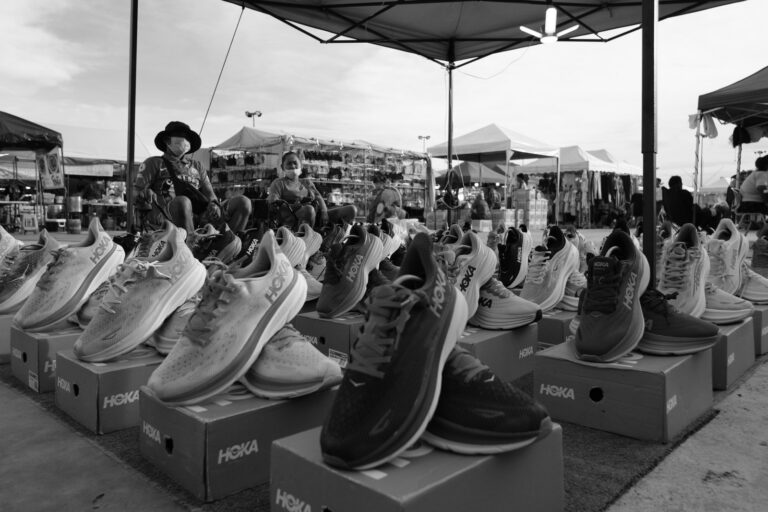
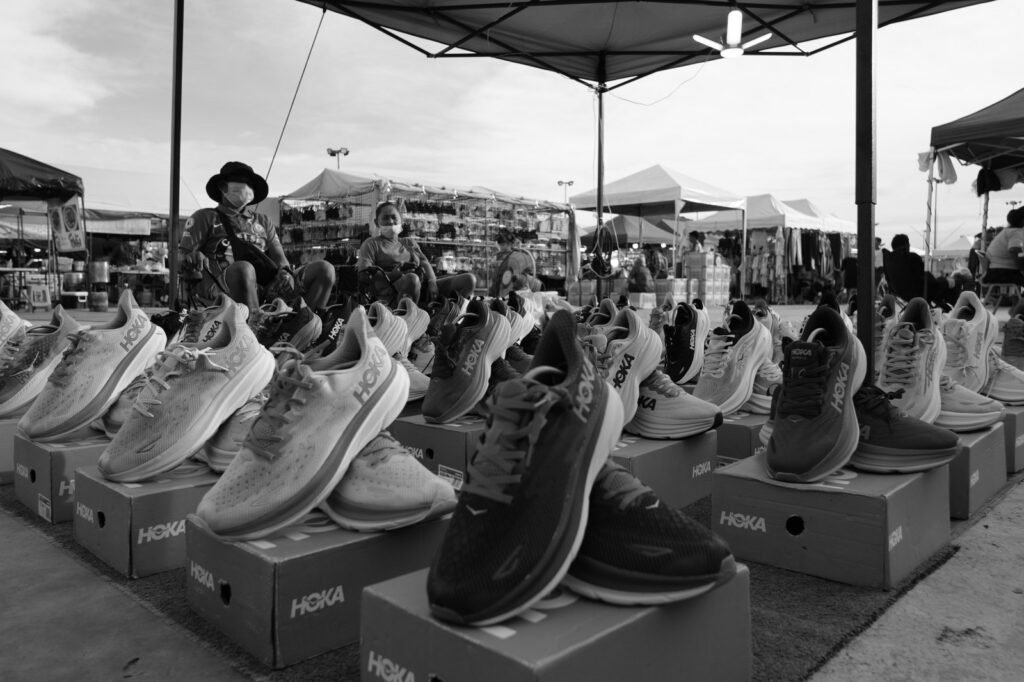
Photo: PattayaPatrol (CC BY-SA 4.0)