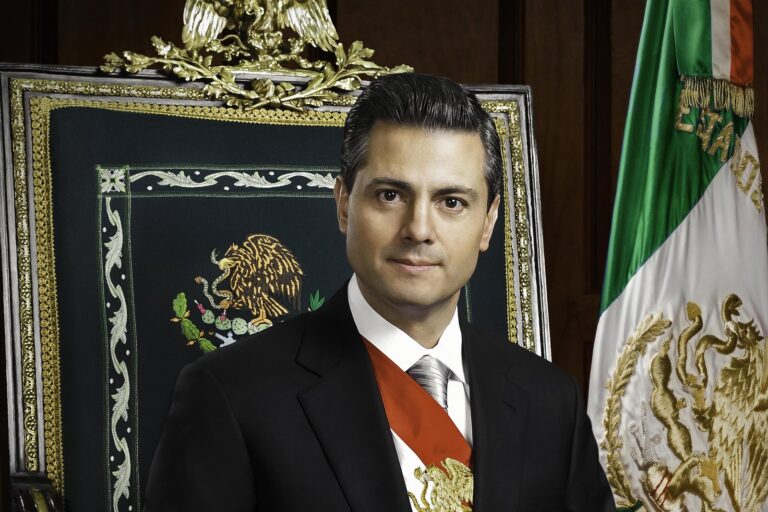
The story of Enrique Peña Nieto is a study in contrasts. It begins with a young politician rising through the ranks of Mexico’s established elite, promising a new era of efficiency and reform. What unfolded was a career defined by a rapid ascent to the nation’s highest office, a term marked by ambitious economic overhauls, and a descent into becoming one of the most unpopular leaders in modern Mexican history.
Origins in the PRI Political Machine
Enrique Peña Nieto was born in Atlacomulco and raised in Toluca, the son of a family deeply embedded in Mexico’s political establishment. His early career saw him navigate the bureaucratic ladder, serving as Secretary of Administration from 2000 to 2002 before winning election as a local deputy. However, it was his tenure as Governor of the State of Mexico from 2005 to 2011 that served as the proving ground for his national ambitions. As governor, Peña Nieto pledged to deliver 608 compromisos, or commitments, to his constituency, a strategy that showcased his organizational skills within the Institutional Revolutionary Party (PRI). His time in the state was not without controversy; his administration faced criticism over a rising murder rate and the San Salvador Atenco civil unrest, issues that would follow him onto the national stage.
The 2012 Victory and the Pact for Mexico
Peña Nieto launched his 2012 presidential campaign on a platform of economic competitiveness and open government. After a crowded field of candidates saw several withdraw, he secured victory with 38.14% of the vote, becoming the 64th president of Mexico. Upon taking office, he wasted little time in pushing through a legislative agenda. He instated the multilateral Pact for Mexico, a cross-party effort designed to increase legislation across the political spectrum and break the gridlock that had long plagued the country. During his first four years, his administration led a breakup of state monopolies, liberalized the energy sector, instituted public education reforms, and modernized financial regulation. These moves were intended to modernize the Mexican economy and attract investment, signaling a shift toward a more open market model.
The Turning Point: Iguala, El Chapo, and Scandals
The trajectory of Peña Nieto’s presidency shifted dramatically following two high-profile crises. The first was the Iguala mass kidnapping in 2014, in which 43 students disappeared. The incident sparked immediate international condemnation and highlighted the deepening violence and insecurity gripping the nation. The second was the escape of drug lord Joaquín “El Chapo” Guzmán from the maximum-security Altiplano prison in 2015. The escape raised serious questions about prison security and the extent of organized crime’s reach within the government. During his subsequent trial, Guzmán claimed he had bribed Peña Nieto, alleging payments were made in exchange for political favors. These events combined to erode public trust and dominate the latter half of his term.
Legacy of Low Approval and Ongoing Scrutiny
As the scandals mounted, Peña Nieto’s public standing plummeted. He began his term with an approval rate of 50%, but that figure hovered around 35% during his inter-years before bottoming out at 12% in January 2017. He left office in 2018 with a disapproval rating of 77%, reflecting a profound disconnect between the administration and the Mexican public. Beyond public opinion, the former president has faced ongoing legal scrutiny. Former Pemex CEO Emilio Lozoya Austin alleged that Peña Nieto’s presidential campaign received illegal funds from the construction giant Odebrecht in exchange for securing public contracts and political favors. Today, the former president remains a figure of historical controversy, his legacy defined by the gap between his reformist promises and the corruption allegations that ultimately defined his time in office.
In a separate development, current President Claudia Sheinbaum Pardo noted that a maximum security prison in Papantla, Veracruz, was built under Peña Nieto’s administration via a public-private partnership. Sheinbaum indicated that the current government is seeking to acquire the nearly completed facility to operate it under a different scheme, highlighting the lasting impact of infrastructure projects from his administration.
Security Metrics and Infrastructure Handovers
A significant shift in national sentiment occurred recently, with the perception of insecurity in Mexico’s cities reaching its lowest level on record. According to data released by the National Institute of Statistics and Geography (INEGI), 58.1 percent of the population aged 18 and over now considers it unsafe to live in their city. This figure represents a statistically significant reduction from 59.8 percent recorded just three months prior, marking an improvement since the institute began conducting the National Survey of Urban Public Security thirteen years ago.
President Claudia Sheinbaum Pardo highlighted these figures during a press conference at the National Palace, noting that while the overall perception has improved, a gender gap persists. Approximately 64.2 percent of women reported feeling unsafe compared to 50.6 percent of men. In discussions regarding physical security infrastructure, Sheinbaum addressed the status of a maximum security prison in Papantla, Veracruz. She explained that this facility was constructed during the administration of Enrique Peña Nieto under a public-private partnership scheme.
The current government is actively seeking to acquire the nearly completed facility to operate it under a different scheme. The project stands at approximately 90 percent completion. This initiative continues infrastructure projects initiated by the previous administration, though the costs associated with such developments were noted as having been reduced practically by half under former president Andrés Manuel López Obrador. Officials have tasked the head of the Secretariat of Finance and Public Credit to carry out an appraisal and review how much has been paid before holding talks with the construction company to finalize the transfer.
Sources
- Enrique Peña Nieto
- Perception of Insecurity in Mexico Reached the Lowest Level on Record
- Caro Quintero: The legendary drug lord with whom the US will ultimately strike a deal
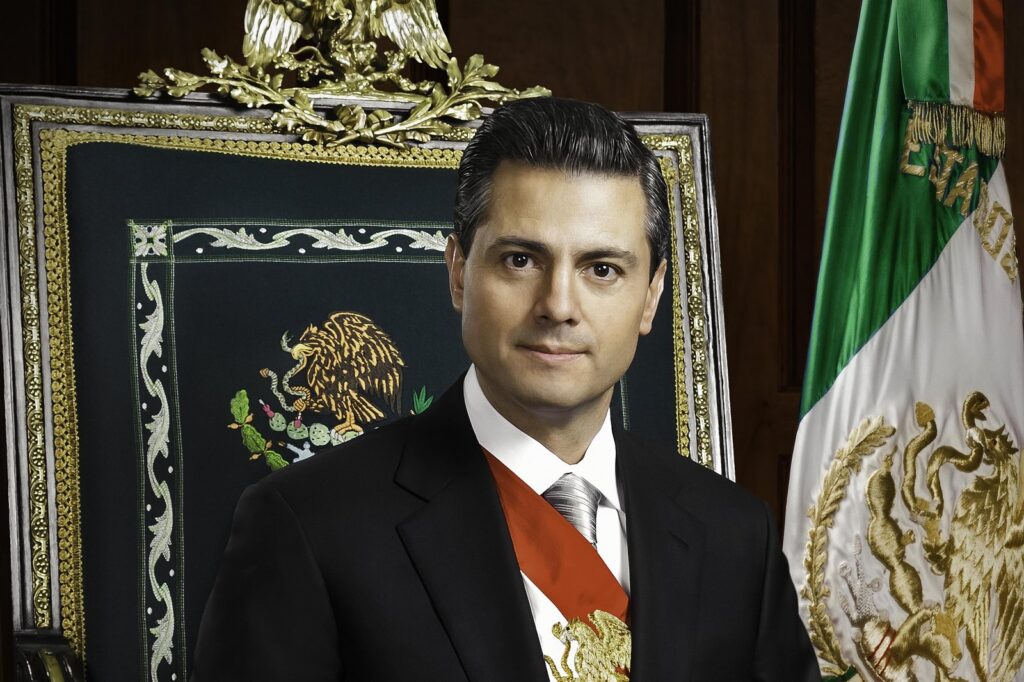
Photo: PresidenciaMX 2012-2018 (CC BY-SA 3.0)